

Frequently Asked Questions
The bus isn’t coming. What should I do now? Visiting Berlin? We’re happy to answer your questions: by phone, by email or in person.
Where can I find information during my visit to Berlin?
How does public transport work? Which ticket do I need?
Boat tours & trips on the Spree
Experience Berlin with accessibility
Out and about in Berlin with your dog
Services: from pharmacies to lost property offices
The Wall, the Reichstag, the TV Tower: things you mustn’t miss in Berlin
What’s on in Berlin? – Events & concerts
Shopping in Berlin: Sunday shopping & high streets
Food & drink: From currywurst to Michelin-starred vegan cuisine
Cancelling and rebooking tickets
Where can I find information during my visit to Berlin?
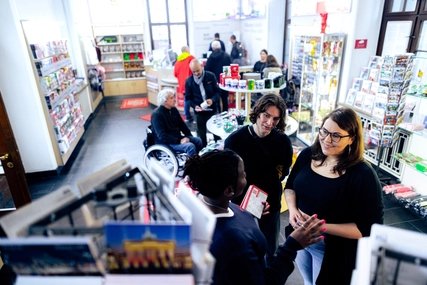
Where can I find the nearest Berlin tourist information centres?
There are several tourist information centres in Berlin that can help you with city maps, tickets and information on attractions and events. The main locations are:
- Berlin Tourist Info at the Hauptbahnhof: Located in the shopping arcades of the Hauptbahnhof, opposite the DB Information desk at the Europaplatz entrance.
- Berlin Tourist Info at the Brandenburg Gate: Right on Pariser Platz, very close to the Brandenburg Gate.
- Berlin Tourist Info at Berlin Brandenburg Airport (BER): This is located in Terminal 1 of the airport.
- Berlin Tourist Info at the Humboldt Forum: Located in the foyer of the Humboldt Forum in the Berlin Palace. Here, visitors can obtain information on attractions, events and tickets. Further details are available at www.visitberlin.de/de/berlin-tourist-info-im-humboldt-forum.
In addition, some Berlin districts have local tourist information centres offering specific tips.
The exact opening hours and further details are available on the respective websites.
Are there any city maps, apps or digital city guides?
As well as our visitBerlin website, our two apps also offer inspiration and guidance for exploring the city:
- ABOUT Berlin is your digital city guide to Berlin’s history, featuring over 300 entries, tours and plenty of multimedia elements that bring history to life on the spot.
- Our Berlin Unboxed podcast takes you behind the scenes of the city. Each episode takes you to an exciting location in Berlin and introduces you to the people behind it.
- Make the most of our monthly visitBerlin newsletter, packed with exciting, up-to-date information, as well as our curated weekend tips.
- Feel free to take a look at our events calendar too.
- When you purchase a Berlin Welcome Card, you’ll automatically receive one printed copy plus a city map of the Berlin WelcomeCard Guide with every order. If required, additional copies can be collected from Berlin Tourist Information centres upon presentation of a valid Berlin WelcomeCard. Alternatively, the guide is also available to download from the visitBerlin online shop.
- For environmental reasons, we do not send out information by post. We do not currently offer city maps in our online shop; for these, we would refer you to your local bookshop.
Public transport – The best ticket for your visit to Berlin

How much does public transport cost?
- Tickets for public transport are available at all BVG ticket offices. The price depends on the ticket’s validity period and the fare zone. For the city centre area (the whole of Berlin), fare zone AB applies (single ticket AB).
- For journeys beyond Berlin’s city limits to Potsdam or Schönefeld Airport, you must purchase a ticket for fare zone ABC and validate it before starting your journey (single ticket ABC).
- All information on local transport
- Did you know? The Berlin WelcomeCard offers free travel on public transport as well as numerous discounts and reductions with partners across the city.
How much does the Berlin WelcomeCard cost? What’s the best ticket for a stay in Berlin?
The best ticket options for a day or a short break in Berlin are:
Berlin WelcomeCard (including local public transport + discounts on attractions)
The Berlin WelcomeCard is just the thing for exploring Berlin independently and flexibly at your own pace. With free travel on buses and trains plus discounts on over 200 attractions in Berlin, this tourist ticket is an all-inclusive, worry-free package.
Further information on the Berlin WelcomeCard
- What the Berlin WelcomeCard offers you
- Discount partners of the Berlin Welcome Card
- Buy the Berlin Welcome Card online
- Get advice in person at the Berlin Tourist Information centres
Alternatively, you can usepublic transport with a BVG ticket.
What do fare zones A, B and C mean?
Zone A covers the city centre up to and including the S-Bahn ring. Zone B covers the area outside the S-Bahn ring up to the city limits. The Berlin suburbs are covered by Zone C, including the city of Potsdam. With the ABC ticket, you can also travel to Berlin Schönefeld Airport.
Are there group tickets for tourists?
For groups of up to five people, the Berlin-Brandenburg Transport Association (VBB) offers the 24-hour small group ticket. This ticket allows you to use BVG and VBB public transport as often as you like within the selected fare zone for 24 hours from the time of validation. Prices vary depending on the fare zone:
Deutsche Bahn also offers the Brandenburg-Berlin Ticket (for up to 5 people)
- This ticket is valid for unlimited journeys on public transport (BVG and VBB) as well as on local trains, on weekdays from 9.00 am until 3.00 am the following day; on Saturdays, Sundays and public holidays from midnight until 3.00 am the following day
What is the difference between BVG and VBB?
- The BVG (Berliner Verkehrsbetriebe) is the largest local transport operator in Berlin and runs the underground, trams, buses and some ferry routes within the city. It is responsible for local public transport in Berlin.
- The VBB (Verkehrsverbund Berlin-Brandenburg) coordinates public transport in Berlin and throughout the federal state of Brandenburg. In addition to the BVG, it also includes the Berlin S-Bahn and many other transport operators in the region.
- In the event of a BVG strike, you can use the S-Bahn and regional rail services.
Are there any concessions for children?
- Children under the age of 6 travel free of charge when accompanied by an adult and do not require a ticket.
- Children aged 6 to 14 inclusive are eligible for the reduced fare. For example, a single ticket in fare zones AB & ABC costs
Are there any concessions for people with disabilities?
- People with severe disabilities who hold a green-and-orange disability card bearing specific codes (G, aG, H, Bl, Gl) can use Berlin’s public transport free of charge. This requires a valid token, which can be applied for at the Social Security Office.
- If the B mark is present, one accompanying person may travel free of charge. Orthopaedic aids and guide dogs may also be carried free of charge.
Is public transport in Berlin safe?
Yes, public transport in Berlin is generally considered safe. The BVG (Berliner Verkehrsbetriebe) and Deutsche Bahn implement various measures to ensure passenger safety:
- CCTV: Many stations, underground trains, S-Bahn trains and buses are fitted with cameras.
- Security and service staff: Security staff and service personnel are on duty at larger stations and on many trains.
- Emergency call points and alarm buttons: These are located at stations, as well as on trains and buses, and can be used in an emergency.
- Good lighting: Many stations and stops are well lit, even at night.
Nevertheless, as in any major city, it is advisable to remain alert and keep an eye on your valuables, particularly on crowded trains or at busy stations. If you feel unsafe or wish to report a situation, you can always speak to security staff or use the emergency facilities.
Is the public transport network accessible?
- 85 per cent of stations are accessible without steps, and 77 per cent have a tactile guidance system
- Of the 825 tram stops in Berlin, more than 595 are accessible
- If a connection you require is not accessible – for example, due to a lift fault – you can book the VBB Accessible Alternative Transport Service (Barrierefreier Alternativ-Verkehr, VBB-BAV) via the app or by telephone (030 25 41 44 44). Here you can get personalised advice on lift faults and alternative routes. If there is no alternative, an accessible taxi will be arranged for you.
- All information on accessibility in local public transport
Which apps are useful for public transport and finding your way around the city?
There are several helpful apps for public transport in Berlin, specifically designed for the capital:
- BVG Fahrinfo app: The official BVG app offers route planning, real-time departure times, ticket purchases and disruption alerts.
- BVG Jelbi: A mobility app that integrates not only public transport but also sharing services such as e-scooters, bicycles and car-sharing.
- VBB “Bus & Bahn” app: The app from the Berlin-Brandenburg Transport Association (VBB) covers the entire transport network and also offers route planning, tickets and real-time data.
- Citymapper: A user-friendly app with many features, such as alternative route options and real-time traffic information.
How do I get from the airport into the city?
Berlin Brandenburg Airport (BER) is well connected to the public transport network. There are several ways to get to the city centre:
1. S-Bahn
- Lines S9 and S45 run from Terminals 1 and 2 towards the city centre.
- The S9 runs via Ostkreuz, Alexanderplatz and the main station.
- The S45 runs via Südkreuz.
- The journey to Alexanderplatz takes approx. 35 minutes.
2. Regional train
- The RE7 and RB14 services run directly to Berlin Hauptbahnhof.
- Journey time: approx. 30 minutes.
3. Express buses
- The X7 or X71 bus connects the airport with the U7 underground line (Rudow).
- From there, continue by underground to the city centre.
4. Taxi or hire car
- A taxi to the city centre costs around 50 euros, depending on your destination.
- The journey takes about 30 to 40 minutes, depending on traffic.
- With the Berlin WelcomeCard, you can make unlimited use of public transport.
6. Car-sharing
- At car park P4, just a few minutes’ walk from the terminals, you’ll find several car-sharing providers. However, vehicles can only be collected and returned at this car park. Further information is available at berlin-airport.de.
Depending on your destination in the city, the S-Bahn or regional train is usually the quickest option. You can find the latest timetables at bvg.de or bahn.de.
Tours & City Guided Tours
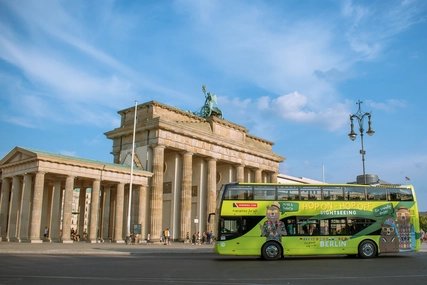
Are there guided tours of Berlin?
Yes, there are numerous guided tours in Berlin covering a variety of themes and interests. Here are some of the most popular options:
- Classic city sightseeing tours by bus – hop-on, hop-off tours offer a good overview of the main sights, such as the Brandenburg Gate, the Reichstag and Potsdamer Platz.
- Themed walking tours – Guided tours on specific topics such as the Berlin Wall, the Third Reich, street art or Jewish Berlin.
- Boat trips on the River Spree – A relaxing way to discover the city from the water, with panoramic views of the government district and Museum Island.
- Cycling tours – Guided bike tours through various neighbourhoods, parks or along the former Berlin Wall.
- Culinary tours – Explore Berlin’s gastronomic diversity with stops at cafés, markets or specialist restaurants.
Find further information and book tickets for available tours and provider overviews here.
Where can I book city tours?
There are many ways to experience Berlin. When booking, our experts at the Berlin Tourist Info centres on site or at the Berlin Service Centre are happy to assist you by telephone. Whether you’re looking for city tours on foot, by Segway, by bus or along Berlin’s waterways, we’ll be happy to help you choose the right tour.
The bus isn’t coming. What should I do now?
If the sightseeing bus isn’t arriving, there are several options:
1. Check whether there are any current timetable changes or delays. Many operators have a helpline or an app with real-time information.
2. Wait at the bus stop, as buses may be delayed depending on traffic conditions.
3. If the bus is taking a very long time to arrive, contact the customer service team of the relevant operator. You’ll find their contact details on the operator’s website or on your ticket.
Can I also take a city tour on the 100/200 route?
Yes, the BVG’s bus routes 100 and 200 are an affordable alternative to traditional city sightseeing tours. Both routes pass by many of Berlin’s sights:
- Bus 100 connects Alexanderplatz with Zoologischer Garten, passing the Brandenburg Gate, the Reichstag, the Victory Column and Kurfürstendamm along the way.
- Bus 200 also departs from Alexanderplatz, but takes a slightly different route via Potsdamer Platz, Tiergarten and the Berlin Philharmonic complex to Zoologischer Garten.
As these are regular BVG routes, the standard VBB fare applies. A day ticket or the Berlin WelcomeCard is worth it if you want to get off at several stops. Timetables and ticket prices are available at www.bvg.de.
Where does bus 100 go?
Bus 100 is a regular BVG service. It runs between Zoologischer Garten in City-West and Berlin’s Alexanderplatz, passing almost all of Berlin’s major sights. Further information on Bus 100
Where can I book a guide for a private city tour?
visitBerlin offers various options for private city tours in Berlin. You can book bespoke tours where you set the date, group size and route yourself. Further information can be found on our visitBerlin website under ‘City Tours ’ or ‘Guided Tours’.
Boat tours & Spree cruises – exploring Berlin’s waterways
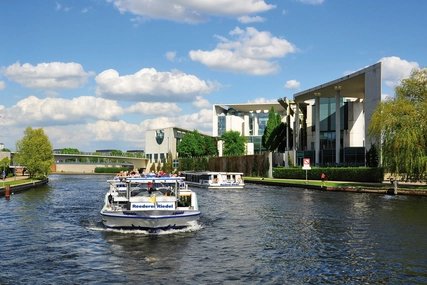
What boat tours are available in Berlin?
The BVG operates several ferry routes which you can use with your public transport ticket.
A boat tour or Spree cruise is a great way to start a sightseeing trip. Here you’ll find an overview of boat trips in Berlin on the Spree, the Havel or Lake Müggelsee.
Where are the boarding and disembarkation points?
- Alte Börse landing stage (Hackescher Markt): This is situated in the immediate vicinity of Museum Island and Berlin Cathedral. It is an ideal
- starting point for tours through Berlin city centre.
- East Side Gallery jetty (Mercedes-Benz Arena): Situated near the East Side Gallery and the Mercedes-Benz Arena, this jetty is particularly well-suited for tours along the eastern bank of the River Spree.
- Friedrichstraße landing stage (Reichstagufer): Situated right next to Friedrichstraße station, this landing stage offers access to tours through the government district and Berlin’s historic city centre.
- Nikolaiviertel Pier: This pier is situated near the historic Nikolaiviertel and is a good starting point for boat trips through the city centre.
- Hauptbahnhof Pier: Just a few minutes’ walk from Berlin’s main railway station, this pier offers convenient access to various boat tours, particularly through the government district.
A complete overview of all jetties can be found on Berlin’s official tourism website at www.berlin.de/tourismus/dampferfahrten/anlegestellen/
Can I buy tickets for a boat tour directly on site or at the boarding points?
Yes, you can usually buy tickets directly at the departure point. Many operators have ticket booths or machines at the jetties where you can purchase your ticket before departure. However, particularly during the peak season or for popular tours, boats may be fully booked.
I therefore recommend, particularly at weekends or for special trips (e.g. evening or dinner cruises), that you book your ticket in advance online or by telephone with the operator, or purchase it via visitBerlin:
Are there any discounts for children? Where can I buy children’s tickets?
The Bruno Winkler shipping company offers a 1-hour boat tour for which children’s tickets are valid for children aged 6 to 14; you can book these online. Children under 6 travel free of charge when accompanied by a paying adult.
The BWSG (Berliner Wassersport und Service Gesellschaft) also offers a 1-hour city tour on the Spree. Children’s tickets are valid for children aged 7 to 14, whilst children under 7 travel free of charge.
Can I board the boat in a wheelchair? Are the boats accessible?
Many of the larger boat operators in Berlin now offer accessible boats equipped with ramps or lifts for wheelchair users. However, this varies depending on the jetty and type of boat. Please check with the respective operators. You can find an overview here.
Do I need to book a seat on the boat?
- For regular scheduled services, a booking is usually not necessary; however, it is advisable to book a seat in advance, particularly during the peak season or for special trips (e.g. evening or dinner cruises).
- If you are travelling with a larger group or require an accessible seat, it is also advisable to make a reservation.
Are dogs allowed on board?
The rules vary depending on the shipping company:
- Stern und Kreisschifffahrt: Small dogs weighing up to 5 kg are permitted on board. Larger dogs are permitted only at the discretion of the staff; in this case, a child’s ticket must be purchased. Dogs must be kept on a lead, and a muzzle should be carried.
- Solar Water World: Dogs are permitted for a small additional charge. Tickets can be booked online.
- Berlin Cityschiffahrt: Small dogs weighing up to 5 kg are permitted. For larger dogs, the decision is made by staff on board. Guide dogs may be brought on board free of charge.
- Reederei Spreetours: Dogs are permitted on board.
- On BVG ferry routes, small dogs that can be carried in hand luggage are permitted; larger dogs must be kept on a lead and wear a muzzle, and must not jeopardise the safety of operations. On certain modes of transport, dogs may not be permitted. In case of doubt, the decision rests with the staff. Guide dogs and assistance dogs for people with disabilities are always permitted on board.
- In general, dogs should be kept on a lead, and it is advisable to carry a muzzle.
Experience Berlin without barriers
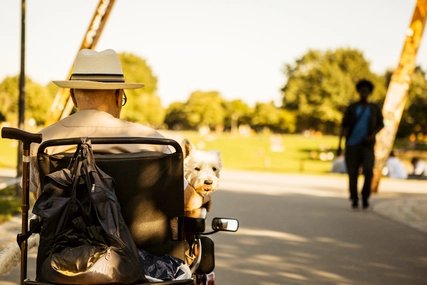
Which attractions in Berlin are accessible?
Many museums and sights in Berlin are accessible. On our website ‘Experience Berlin Accessibly’, we have compiled all the key information for you here.
Is the Reichstag accessible?
Yes, the Reichstag is accessible.
- The entrance has ramps and automatic doors.
- A lift leads to the dome and the roof terrace.
- Tactile models and audio guides are available for blind and visually impaired visitors.
- Assistance dogs are permitted.
- Accessible toilet facilities are available.
Advance booking is required for visits. Information on accessibility and booking is available at www.bundestag.de/besuche.
Why isn’t the TV Tower accessible?
- The Berlin TV Tower is not accessible because, in the event of an emergency, evacuation must take place via the stairs.
- Although the lifts go up to the viewing platform and the restaurant, they must not be used in the event of a fire or other emergency. As there are no accessible escape routes and the stairwells are not designed to allow wheelchair users to evacuate safely, access is not permitted for people in wheelchairs for safety reasons.
- The Panoramapunkt at Potsdamer Platz offers a accessible alternative. The viewing platform, situated 100 metres above ground level, is accessible by lift and is fully accessible.
Out and about in Berlin with your dog
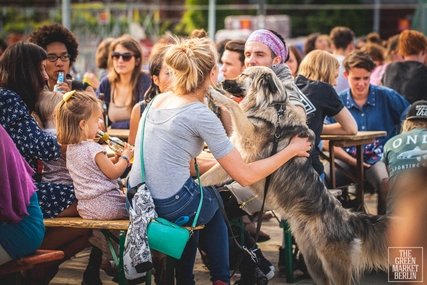
What do I need to bear in mind when travelling to Berlin with a dog?
Berlin is a dog-friendly city. We’ve put together all the key information for you in our article ‘Berlin with a dog ’. Please note:
In pedestrian zones and busy streets, as well as in public buildings and on public transport, dogs must be kept on a lead no longer than one metre.
Dogs are generally not permitted in some public green spaces and parks, on children’s playgrounds, in certain public buildings (e.g. some tourist attractions, museums, concert halls and churches), as well as in shops and restaurants.
Dogs must be kept on a lead on the S-Bahn, U-Bahn, buses and trams, as well as at railway stations. They must also always wear a suitable muzzle.
Here you will find designated dog walking areas, sorted by district.
Are dogs allowed in the Reichstag?
- No, dogs are not permitted in the Reichstag building. An exception applies to assistance dogs, such as guide dogs for the blind or other specially trained assistance dogs. These may be brought in provided the owner can produce the relevant proof.
- Further information on the visitor rules is available at www.bundestag.de/besuche.
Are dogs allowed in museums?
- Dogs are not permitted in most Berlin museums. An exception is generally made for assistance dogs, such as guide dogs for the blind or other specially trained assistance dogs, which are admitted provided the owner can produce the relevant proof.
- Some museums with outdoor areas, such as the Domäne Dahlem Open-Air Museum or the Düppel Museum Village, allow dogs on a lead. It is advisable to check the relevant museum’s website before your visit or to enquire directly with the museum.
Can I take my dog on public transport?
- As a general rule, animals travelling on public transport must not jeopardise the safety of the service or cause a nuisance to other passengers.
- Pets that are not kept in a closed carrier should be kept on a lead and wear a muzzle.
- On double-decker buses, dogs are only permitted on the lower deck.
- Animals must also not be placed on seats.
- Guide dogs for the blind and assistance dogs for people with disabilities, as defined in Section 228(6)(2) of Book I of the Social Code (SGB I), are always permitted on board.
Service & Important Information
Where can I exchange money?
There are several bureaux de change and banks in Berlin where you can exchange money. Here are some central locations:
- Reisebank AG: Branches are located at major railway stations such as Hauptbahnhof, Friedrichstraße and Zoologischer Garten. You can find the exact locations and opening hours at www.reisebank.de/filialen.
- Euro Change Wechselstuben AG: Branches include those at Alexanderplatz and on Friedrichstraße. Details of addresses and opening hours can be found at www.euro-change.de.
- Exchange AG: Branches include one on Schloßstraße in Steglitz. Further information is available at www.exchange-ag.de/filialen.
Please note that exchange rates and fees may vary. It is therefore advisable to check the current terms and conditions in advance. Alternatively, you can use cash machines, which are available throughout the city. However, bear in mind any fees your bank may charge for international transactions.
What payment options are available in Berlin (cash/card)?
In Berlin, you can pay both in cash and by card, although there are a few things to bear in mind:
- Cash remains the preferred method of payment in many restaurants, smaller shops and at markets. Snack bars, bakeries and street vendors, in particular, often only accept cash.
- Card payments are widely accepted, particularly in larger shops, hotels, restaurants and supermarkets. EC cards (Girocard) and credit cards such as Visa and Mastercard are usually accepted.
- Contactless payments via NFC or using a smartphone (Apple Pay, Google Pay) are supported in many shops and on public transport.
- Public transport (BVG, S-Bahn) accepts card payments at ticket machines and via apps; on buses, however, only contactless payment or pre-purchased tickets are usually accepted.
It is advisable to always carry some cash with you, as card payments are not accepted everywhere. Cash machines are easy to find throughout the city.
I’ve lost something. Where is the lost property office?
If you have lost something in Berlin, you can contact the nearest police station or a lost property office:
- The Central Lost Property Office is located at Platz der Luftbrücke 6, 12101 Berlin, in the building of the former Tempelhof Airport.
- Opening hours are: Monday and Tuesday from 9.00 am to 2.00 pm, and Thursday from 1.00 pm to 6.00 pm. Further information can be found at .
- Please note that it often takes a few days for a lost item to be listed at the lost property office. If a lost item is accompanied by an identity card or other form of identification, you will be notified.
- If you have lost something on public transport, the BVG Lost Property Office and the S-Bahn Lost Property Office can help.
Where is the post office?
Deutsche Post branches for national and international postal services are located throughout the city. To find an exact location, visit the Deutsche Post website at www.deutschepost.de
Where can I find a pharmacy that’s open?
In Berlin, there are several ways to find a pharmacy that is open, particularly outside regular opening hours:
Emergency pharmacies: The Berlin Chamber of Pharmacists offers an emergency pharmacy finder , which you can use to locate the pharmacies currently on duty in your area.
Pharmacies open every day:
Some pharmacies in Berlin are open every day, including:
- Pharmacy at Berlin Central Station: Europaplatz 1, 10557 Berlin. Open daily from 7.00 am to 9.00 pm.
- Medios Pharmacy at Oranienburger Tor: Friedrichstraße 113a, 10117 Berlin. Open daily from 8.00 am to midnight.
- Nordkreuz Pharmacy at Gesundbrunnen: Hanne-Sobek-Platz, 13357 Berlin. Open Monday to Friday from 8.00 am to 8.00 pm, Saturday from 9.00 am to 7.00 pm and Sunday from 10.00 am to 4.00 pm.
The pharmacies’ emergency services rotate daily. It is therefore advisable to check the current opening hours and emergency services in advance.
Are there any internet cafés or free Wi-Fi in the city?
There are many places in Berlin with free Wi-Fi:
- Public Wi-Fi hotspots **“Free WiFi Berlin”** are available in many squares, streets and parks, e.g. at Alexanderplatz, the Brandenburg Gate and Kurfürstendamm.
- Railway stations and airports, including Berlin Hauptbahnhof, Ostbahnhof and BER Airport, offer free Wi-Fi.
- Public libraries, such as the Berlin Central and State Library, provide free internet access.
- Many cafés, restaurants and shopping centres offer free Wi-Fi to customers.
All the information about public Wi-Fi in Berlin
www.berlin.de/wlan
Where can I find a toilet?
With over 400 public toilet facilities across the city – 100 of which are free – you can use public toilets anytime, anywhere whilst out and about. You can find an overview of the exact locations here.
Don’t miss these in Berlin!

Which sights should I make sure not to miss?
Berlin offers many sights that are not to be missed. Here are some of the most important ones:
- Here are the top 10 sights in Berlin
- Brandenburg Gate – Berlin’s landmark and a symbol of German unity.
- Reichstag – Seat of the German Bundestag, featuring a glass dome open to the public.
- Berlin TV Tower – The city’s highest viewing platform, offering panoramic views.
- Museum Island – A UNESCO World Heritage Site featuring five major museums, including the Pergamon Museum.
- East Side Gallery – The longest surviving section of the Berlin Wall, featuring artistic graffiti.
- Berlin Wall Memorial – An important site commemorating the division of Germany.
- Charlottenburg Palace – An impressive Baroque palace complex with a park.
- Kurfürstendamm and KaDeWe – Berlin’s famous shopping street and Europe’s largest department store.
- Potsdamer Platz – A modern hub featuring architecture, cinemas and shopping.
- Tempelhofer Feld – The former airport is now a huge park for walking, cycling and picnicking.
Many of these attractions offer discounted or free entry with the Berlin WelcomeCard.
Where was the Wall?
The Berlin Wall separated West and East Germany between 1961 and 1989. The best way to explore the route of the former border is by bike along the Berlin Wall Cycle Route. On foot, the best place to explore the former border is between Warschauer Straße and Ostbahnhof at the East Side Gallery – the world’s longest open-air gallery.
How much time should I allow for the Berlin Wall?
The amount of time you should allow for the Berlin Wall depends on which sites you wish to visit:
- East Side Gallery (1 hour) – The longest surviving section of the Wall, featuring over 100 works of art. A walk along the 1.3-kilometre-long gallery takes around 30 to 60 minutes.
- Berlin Wall Memorial on Bernauer Strasse (1.5 to 2 hours) – Includes a visitor centre, a documentation centre with a viewing point, and the preserved border strip. Here you can explore the history of the Wall in greater depth.
- Mauerpark (1 hour) – A section featuring remnants of the Wall, now a popular meeting place with a flea market (on Sundays) and live music.
- Checkpoint Charlie and the Berlin Wall Museum (1 to 2 hours) – The most famous former border crossing, featuring an exhibition on escape stories and the Cold War.
If you just want to get a brief overview, 1 to 2 hours will suffice. For a more in-depth exploration, you should allow 3 to 4 hours or more.
What is Checkpoint Charlie?
Checkpoint Charlie is the most famous of the Allied border crossings. After 1961, travellers heading for East Berlin were checked here. The iconic sign at the crossing, ‘You are now leaving the American Sector’, is world-famous. For further information on Checkpoint Charlie, or once you’re there, take the U6 to Kochstraße underground station.
What do I need for a visit to the Reichstag?
Visitors to the German Reichstag, including those wishing to visit the Reichstag dome, must book in advance. This can be done very easily via the online form at www.bundestag.de. For last-minute visitors, it is still possible to register directly on site. After visiting the Reichstag, a break at the German Bundestag’s rooftop garden restaurant is highly recommended. More information on bookings
Where can I find information about the memorial sites?
Berlin is a city steeped in history. The numerous events of the Second World War and the division between East and West in the German capital remain unforgettable. Berlin’s memorial sites, such as the Hohenschönhausen Memorial, the Holocaust Memorial and the Berlin Wall Memorial, offer fascinating guided tours exploring historical events.
What are the best vantage points in Berlin?
Berlin offers many impressive vantage points from which to enjoy the city from above. Here are some of the best:
- Berlin TV Tower – At 368 metres, it is the city’s tallest building and one of its most famous viewing platforms.
- Panorama Point at Potsdamer Platz – An open viewing platform at a height of 100 metres with views of the Brandenburg Gate and the Tiergarten.
- Reichstag Dome – A free viewing opportunity with a view of the government district, though advance booking is required. More information at www.bundestag.de/besuche.
- Victory Column – 285 steps lead up to the viewing platform at a height of 67 metres, offering a fantastic view over the Tiergarten.
- Klunkerkranich – A rooftop terrace in Neukölln with a relaxed atmosphere and panoramic views across the city.
Each of these places offers a different perspective on Berlin, depending on your interests and the atmosphere you’re looking for.
What can I do with children in Berlin?
For families, the Berlin WelcomeCard in the ABC fare zone is particularly recommended, allowing one adult and up to three children to use buses and trams. Whether it’s a visit to Berlin Zoo, the Planetarium or the climbing forest: there’s something here for young and old alike!
What day trips can I go on from Berlin?
There are plenty of interesting day trips to be had in the surrounding area from Berlin. Here are some of the best destinations:
- Potsdam – The capital of Brandenburg is famous for Sanssouci Palace, its historic gardens and the Dutch Quarter. The journey by S-Bahn takes around 40 minutes.
- Spreewald – A unique river landscape with traditional boat trips, cycle paths and Sorbian culture. It takes about an hour to get there by train from Berlin Hauptbahnhof.
- Sachsenhausen Memorial – A moving memorial to the former concentration camp in Oranienburg, around 45 minutes by train from Berlin.
- Wannsee and Peacock Island – Relaxation by the water with beautiful parks, the historic Peacock Island and opportunities for day trips to Cecilienhof Palace. Accessible by S-Bahn in about 30 minutes.
- Rheinsberg – An idyllic town with a Baroque palace and a picturesque lake landscape, around 1.5 hours away by train.
- Tropical Islands – A huge leisure and water park with tropical scenery, aquatic worlds and relaxation areas, about an hour from Berlin.
- Thermal baths in Berlin & Brandenburg
All these places are accessible by public transport.
How do I get to Potsdam and Sanssouci Palace?
With the Berlin Welcome Card in fare zone ABC, you can travel comfortably to Potsdam by bus, tram and regional train. From Potsdam Central Station, you can then continue by local public transport to all of Potsdam’s sights – and all on a single ticket! Famous buildings such as Sanssouci Palace, the New Palace and the Dutch Quarter are definitely worth a visit.
What’s on in Berlin?
What events are taking place in Berlin?
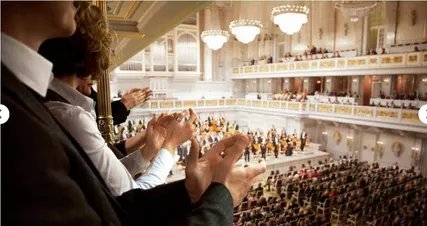
Berlin offers a diverse cultural programme all year round, featuring top-class events in the fields of film, music, theatre, art and festivals. Highlights include the Berlinale in February, the Carnival of Cultures in spring, the Fête de la Musique in June, Berlin Art Week and the Festival of Lights in autumn, as well as numerous Christmas markets & New Year’s Eve celebrations at the end of the year.
As well as three opera houses, Berlin boasts a wide range of stages, theatres and concert halls. To make sure you don’t miss a thing, we’ve put together daily updates on events for you.
Are there any regular festivals or markets in Berlin?
Yes, Berlin hosts numerous regular markets and festivals throughout the year. Here is a selection of the highlights:
1. Weekly markets – Almost every district has weekly markets offering fresh food and regional produce. Particularly well-known are the market at Kollwitzplatz (Prenzlauer Berg), the Winterfeldtmarkt (Schöneberg) and the weekly market at Karl-August-Platz (Charlottenburg).
2. Flea markets – Popular ones include the Mauerpark flea market (every Sunday), the flea market at Boxhagener Platz (Sundays) and the antiques and book market on Museum Island (Saturdays and Sundays).
3. Berlin folk festivals – These include the Berlin Spring Festival (March/April), the German-American Folk Festival (July/August) and the Berlin Oktoberfest (September/October).
4. Christmas markets – From the end of November, there are numerous Christmas markets, including the WeihnachtsZauber at Gendarmenmarkt, the market at Charlottenburg Palace and the Lucia Christmas Market at the Kulturbrauerei.
Festivals and street festivals
1. Carnival of Cultures – This major street festival, featuring a parade and a multicultural programme, takes place annually at Whitsun in Kreuzberg.
2. Christopher Street Day (CSD) in Berlin is one of the biggest and most colourful LGBTQ+ events in Europe and serves as an annual reminder of why Berlin is regarded as one of the liveliest cities for the queer scene worldwide.
3. Kreuzberg Festival – Every June for over three decades, Berlin’s biggest street festival has been celebrated in the Bergmannkiez with plenty of music and street food.
4. 48 Hours in Neukölln – For a full 48 hours during this special weekend in June, you can explore Neukölln and experience a wealth of culture and music.
5. Every year on the summer solstice, the Fête de la Musique transforms the whole of Berlin into one big stage
6. Street Food Thursday – Every Thursday at Markthalle Neun in Kreuzberg, there’s a wide selection of international street food specialities.
You can find a complete and up-to-date overview in the visitBerlin events calendar.
Where can I listen to live music? What can I do in Berlin in the evening?
Berlin offers a wide range of venues for live music, ranging from small clubs to large concert halls and stages.
- Here you’ll find the latest concert highlights
- And here are 11 popular jazz bars in Berlin
- Musicals & Shows
- Theatre
Shopping in Berlin

Where can I find good shopping?
Berlin offers a wide range of popular shopping streets, each with its own speciality. Here is a selection:
- Kurfürstendamm and Tauentzienstraße – Berlin’s best-known shopping mile, featuring major fashion houses, luxury boutiques and the famous Kaufhaus des Westens (KaDeWe).
- Friedrichstraße – An upmarket shopping street featuring exclusive brands, the Quartier 206 and Galeries Lafayette.
- Schlossstraße – The main shopping street in Steglitz, with several shopping centres, including the Schloss-Straßen-Center and Boulevard Berlin.
- Alexanderplatz – Home to large department stores such as Galeria and the Alexa shopping centre, with numerous fashion and electronics shops.
- Hackescher Markt and the surrounding area – A creative shopping district with small boutiques, designer shops and the Hackesche Höfe.
- Bergmannstraße – A charming shopping street in Kreuzberg with unique shops, bookshops and cafés.
- Prenzlauer Berg (Schönhauser Allee, Kastanienallee and the surrounding area) – Lots of small boutiques, fashion shops and designer shops.
For a detailed overview, I recommend taking a look at our shopping page.
Are the shops open on Sundays?
Most shops in Berlin are closed on Sundays. However, there are a few exceptions for Sunday shopping:
- Supermarkets in railway stations and at airports, e.g. at Hauptbahnhof, Ostbahnhof or BER Airport, are also open on Sundays.
- Some late-opening shops (“Spätis”) sell drinks, snacks and everyday items, but not all of them are officially allowed to trade on Sundays.
- Petrol stations and kiosks often stock a small selection of food and toiletries.
- On certain**designated Sunday shopping days**, larger shops and shopping centres are permitted to open. These usually take place several times a year. The dates are announced at www.berlin.de/shopping.
For larger purchases or shopping trips, it’s best to go on Monday to Saturday instead.
Where can I find Berlin souvenirs?
Souvenirs from Berlin are primarily available at Berlin’s tourist information centres. There you’ll find a wide selection of classic souvenirs such as postcards, magnets, Berlin bears, ‘Ampelmännchen’ merchandise and regional specialities.
Here are the addresses of the main locations:
- Tourist Information Centre at Berlin Central Station (ground floor, Europaplatz entrance)
- Tourist Information Centre at the Brandenburg Gate (Pariser Platz, right next to the Brandenburg Gate)
- Tourist Information Centre at Berlin-Brandenburg Airport (BER) (Terminal 1, arrivals hall)
- Humboldt Forum Shop at the Humboldt Forum (Schlossplatz 1) – Here you’ll find a special selection of books, design items and high-quality souvenirs relating to Berlin’s history and culture.
There are also souvenir shops, such as the Ampelmann Shops, at many tourist hotspots, for example along the Ku’damm, in the Hackesche Höfe or around Alexanderplatz.
Are there designer outlets and second-hand shops in Berlin?
Yes, Berlin has both designer outlets and plenty of second-hand shops selling vintage and designer fashion.
- Designer Outlet Berlin – A large outlet centre featuring brands such as Adidas, Boss and Michael Kors. It is located outside the city in Wustermark and can be reached by shuttle bus.
- We've compiled a list of all the outlets in Berlin for you in our guide.
Second-hand and vintage shops:
- Humana – One of the largest second-hand chains with several branches, including the multi-storey shop on Frankfurter Allee.
- Garments Vintage – A boutique specialising in high-quality vintage and designer fashion. Location: Mitte.
- Kleidermarkt Colours – A large vintage shop selling clothes by the kilo. Location: Kreuzberg.
- Paul’s Boutique – A cult shop for retro fashion and streetwear. Location: Prenzlauer Berg.
- Top 11 second-hand shops
- Vintage shops
Design and Berlin Fashion
- The Store X – An exclusive concept store at Soho House offering high-quality designer fashion and accessories. Location: Mitte.
- Bikini Berlin – Berlin’s first concept mall. Location: Charlottenburg (City West)
- Berlin designers
- Platte.Berlin – a concept space showcasing Berlin-based designers and up-and-coming talent. Location: Mitte
Eating & Drinking in Berlin

Where can I find restaurants serving Berlin cuisine?
Berlin’s culinary scene is world-renowned and diverse. It ranges from snack bars and restaurants to Michelin-starred cuisine, sure to delight any foodie. Find out everything about Berlin cuisine and the capital’s specialities.
Where can I eat currywurst?
Berlin is renowned for its diverse street food and currywurst scene. Here are some of the most popular street food stalls:
Are there any restaurants with vegan or vegetarian options?
In Berlin, almost every restaurant offers a vegan or vegetarian option; you can even order plant-based menus at Michelin-starred restaurants such as Restaurant Tim Raue. Here’s an overview of vegetarian and vegan restaurants in Berlin.
Which beer gardens in Berlin are worth visiting?
Berlin has a wide range of cosy beer gardens that are perfect for relaxing. You can find recommended spots here.
Where can I find traditional Berlin cafés?
Whether it’s cafés basking in the sunshine on a terrace or by the water, cosy cafés for rainy days, beautiful cafés, Asian-inspired cafés, museum cafés, or places for good coffee and fast internet, Berlin has the perfect café to suit every taste.
Changes & Cancellations Booking Process
Can I exchange a ticket that I bought online?
Whether a ticket purchased online can be exchanged depends on the terms and conditions of the specific product.
Please note that for many tickets, particularly the Berlin WelcomeCard, exchanges or refunds are not permitted. If the ticket is not used, or is only used in part, no refund or partial refund will be given. Exchanges may also be excluded for event and admission tickets, unless the event is cancelled for reasons for which the organiser is responsible.
As exchange and cancellation policies vary depending on the product, we recommend that you check the relevant terms and conditions on our website or contact our customer service team directly (telephone: 030/ 25 00 23 33, email: info@visitBerlin.de). We’ll be happy to help.
How long does it take to receive a cancellation confirmation?
The time it takes to receive a cancellation confirmation depends on the product booked. Confirmation is usually sent within a few minutes up to a maximum of 24 hours.
Please note that for certain products, such as the Berlin WelcomeCard, there is no right of withdrawal.
As cancellation policies vary depending on the product, we recommend that you check the relevant terms and conditions on our website www.visitberlin.de or contact us directly. Our customer service team will be happy to help.
What should I do if I’ve lost my ticket?
A lost ticket cannot usually be refunded or replaced.
If you purchased your ticket online, please check your emails or your customer account, as many tickets are available digitally and can be downloaded again. If your ticket is personalised, it may be possible to have a replacement ticket issued.
Unfortunately, replacements are not available for the Berlin WelcomeCard or other physical tickets.
Further information can be found on our website www.visitberlin.de or by contacting our customer service team directly.


