

Spectacular: Unusual bars and restaurants
Culinary delights in old industrial buildings
Berlin’s history is inextricably linked to the age of industrialisation. From the 19th century onwards, more and more industries began to establish themselves in Berlin. The former marshland was transformed into one of Europe’s largest cities. In the 1920s,“Elektropolis”was regarded as a leading centre for the electricity sector and the electrical industry. But the film industry and the brewing trade also developed into the driving force behind the city’s vibrant life during the “Golden Twenties”.
With a new focus on enjoyment and relaxed socialising, we recommend:
|
Many of the old industrial buildings have been preserved, renovated and modernised. Stars of Berlin’s gastronomic scene have set up shop in these historic premises. Today, you can enjoy exquisite dishes in the old substation.
Bars & Restaurants
Our tip for hot days
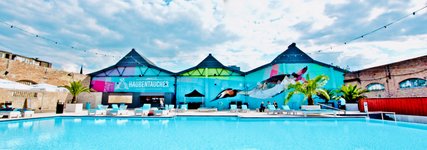
The Beach Club Maaya (formerly Haubentaucher), with its industrial flair, is situated in the heart of the historic RAW site (Reichsbahnausbesserungswerk). Where Reichsbahn trains were once serviced, there is now an event venue, bar and club. The old industrial hall has been extensively restored and possesses a unique charm. Outside, a huge heated pool with a sun deck in the style of the 1960s Côte d’Azur awaits guests keen to take a dip. Here you can cool off wonderfully or simply lounge by the water and leave the hustle and bustle of the city behind you with a cocktail. The Garden Lounge, a restaurant beneath a pergola overgrown with wild vines, offers a Mediterranean ambience and delicacies.
| Maaya | Revaler Straße 99, 10245 Berlin |
| Warschauer Brücke underground and tram station (S3, S5, S7, S9, U1, U3, tram M10) |
Rooftop Bar
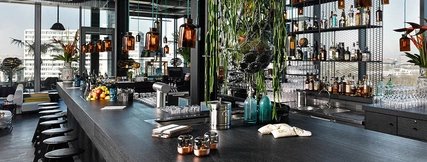
Perched high above the city rooftops with a direct view of the wildlife at Berlin Zoo, the Monkey Bar towers over the city. The rooftop bar is located on the 10th floor of the former Bikinihaus, a listed industrial and commercial building from 1950s West Berlin. Fashionable ‘women’s outerwear’ was produced here on over 700 sewing machines. Today, the Monkey Bar is considered the best hotel bar in Europe: expertly shaken and stirred cocktails and drinks can be sipped on the green terrace, whilst down in the zoo the monkeys screech and the lions roar.
| Monkey Bar | Budapester Straße 40, 10787 Berlin |
| Zoologischer Garten underground station (U2, U9), BUS 100 / 200 (Breitscheidplatz) |
Not just by the Spree, but on it
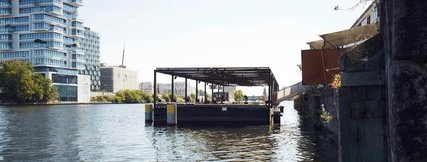
The site of the former army bakery is now home to a restaurant, club and event venue, right on the banks of the Spree. The well-preserved industrial halls were once used for the mass production of rusks and bread for the hungry soldiers of the imperial army.
Where Pan-Asian dishes are served during the week, DJs spin tunes on two dance floors at the weekend. The absolute highlight is the floating Spree terrace, which is open all year round. Come summer or winter, you can enjoy a magnificent view of the water and the East Side Gallery from here.
| Spindler & Klatt | Köpenicker Straße 16-17, 10997 Berlin |
Michelin Guide recommends: Excellent dining in a former distillery
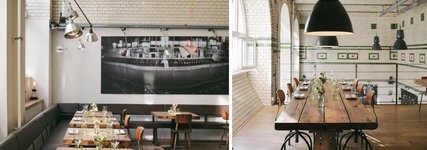
The third courtyard of the former Otto Reichel essence distillery in Neukölln is now home to the restaurant eins44. For many years, essences were distilled and liqueurs produced in this historic turn-of-the-century building. During its conversion into a restaurant, much of the industrial character was preserved and the former production rooms were given a new lease of life. In an impressive atmosphere, beneath original Wilhelminian-style tiling, guests can enjoy gourmet cuisine recommended by the Michelin Guide. The kitchen deliberately focuses on regional and seasonal produce.
| Restaurant eins44 | Elbestraße 28/29, 12045 Berlin |
| Rathaus Neukölln Underground Station (U7) |
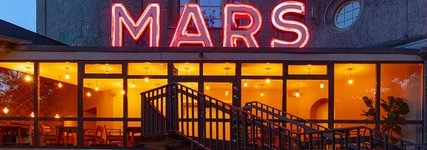
Mars | Restaurant & Bar
One might think it morbid, as dining takes place here in the former Wedding Crematorium. At the beginning of the 20th century, the Association for Cremation had a crematorium and a memorial hall built. Berlin’s population grew, and so did the number of deaths. After it was decommissioned in 2001, the crematorium fell into a sort of slumber.
The premises where the Mars restaurant welcomes its guests are unique in Berlin. However, the cosy interior, large windows and a green outdoor area now give the place a very lively atmosphere. Seasonal and regional dishes are served, with some of the herbs and vegetables even coming from the restaurant’s own roof garden.
The site is also home to the ‘Silent Green Kulturquartier’, which attracts visitors with a diverse cultural and music programme.
| Restaurant Mars | Gerichtstraße 35, side entrance, 13347 Berlin |
| Leopoldplatz Underground Station (U9), Wedding Underground/S-Bahn Station (U6, S41, S42) |
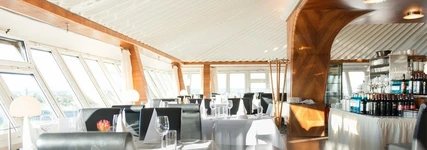
Dining above the rooftops of Berlin
Since 1926, the“Lange Lulatsch” has towered over the western part of Berlin. The radio tower, with its striking steel lattice structure, stands 150 metres tall and offers a breathtaking view of the capital from its viewing platform – it was inspired by the Eiffel Tower in Paris. The former landmark of West Berlin still welcomes all new arrivals approaching from the west today. As early as 1925, the popular transmission mast was broadcasting radio programmes into Berlin’s living rooms, and in 1932 it even transmitted the world’s first television broadcast.
A few metres below, visitors can enjoy not only the panoramic view of Berlin but also the unique dining experience at the Funkturm Restaurant. The faithfully restored Art Nouveau interior evokes the nostalgic charm of the 1920s.
| RadioTower | Hammarskjöldplatz, access via Messedamm, 14055 Berlin |
| S-Bahn station Messe Nord/ICC (S41, S42, S45, S46, S47), U-Bahn station Kaiserdamm (U2) |
More restaurant recommendations for Berlin
Historic market halls
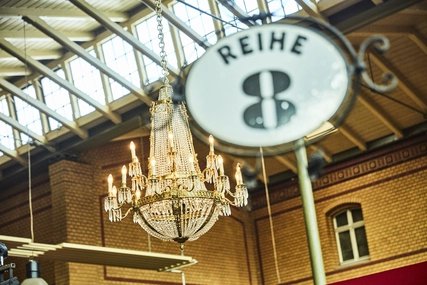
A total of 14 historic market halls were built in Berlin at the end of the 19th century. They were a vital hub for food supply. At Markthalle Neun in Kreuzberg and the Arminiusmarkthalle in Moabit (originally opened as Markthalle 10), you can still find everything a foodie could wish for. The extensively renovated buildings exude a very special charm and impress with their high vaulted ceilings. Visitors can sample a wide range of culinary delights, whilst market stalls offer many regional and handmade products. The atmosphere of the historic market halls can be enjoyed in a variety of restaurants and cafés. Whether Tibetan dumplings or British pies – Kreuzberg’s Markthalle Neun is renowned throughout Berlin for its Street Food Thursday. The Arminius Markthalle in Moabit offers international cuisine ranging from South Africa to Peru.
Berlin’s brewing tradition dates back to the Middle Ages
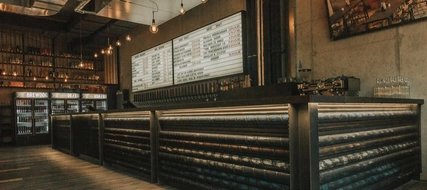
At the start of the 19th century, Napoleon’s troops christened the famous Berliner Weiße ‘Champagne du Nord’ due to its effervescence – this top-fermented, tangy wheat beer dominated the public’s taste at the time. During the Wilhelminian era, breweries sprang up like mushrooms – top-fermented hoppy beer came into fashion, requiring deep cellars for maturation.
As a result, breweries clustered on the city’s high ground, such as the Rollberge in Neukölln or Mühlenberg, later known as Prenzlauer Berg. The latter became a hotspot for Berlin’s brewing industry and is still home to the city’s oldest beer garden, the Prater. Research and training took place in Wedding at the experimental and teaching institute, where one can still learn the art of brewing today.
Craft beer is very much in vogue today. A new generation of young brewers stands at the kettles, experimenting with ever more unusual flavours. Hop and malt enthusiasts can quench their thirst for beer in the capital at over 30 small and microbreweries.
Private Brewery on Rollberg (Kindl Brewery)
The former Kindl Brewery is tucked away beyond Hermannstraße. At the end of the 19th century, the innkeepers of Rixdorf decided to brew their own beer. Beneath the Rollberg hills, there was enough space for deep vaulted cellars to store the bottom-fermented hoppy brew. The famous Kindl beer was brewed here until the brewery closed in 2004 – in 2009, the Privatbrauerei am Rollberg opened. Unfiltered and unpasteurised, the beer has been flowing from the vats ever since, with the focus on pure beer enjoyment. Whether it’s the vibrant Rollberg Rot or Rollberg Weizen – the beer is available only on tap. One should never drink alone, according to the philosophy of the master brewers from Neukölln. Since 2016, the former brewhouse and boiler house, as well as the machine rooms, have been home to the KINDL Centre for Contemporary Art.
100 types of beer at the Mariendorf Gasworks
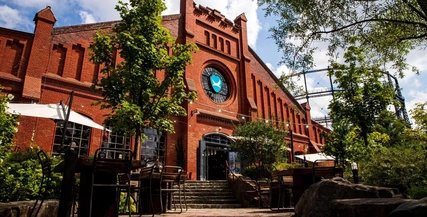
Craft beer flows instead of gas today at the former Mariendorf Gasworks, which once lit up the south of Berlin. Since 2019, BrewDog, a beer giant from the Scottish north, has been based within the listed walls. “Do it yourself” is the founders’ motto, resulting in crazy beer creations with funky names like Elvis Juice, Hazy Jane or Pedal Pony.
Over 100 types of beer are served in Mariendorf – the bright golden Kiezkeule beer is brewed on site. You can sample it in the summer garden or the DogTap Restaurant. The bar and the brewery are separated by a 13-metre-high glass wall, so you can easily watch the brewmasters at work.
BrewDog DogTap Berlin Brewery, Address: Im Marienpark 23, 12107 Berlin
Spandau Brewery
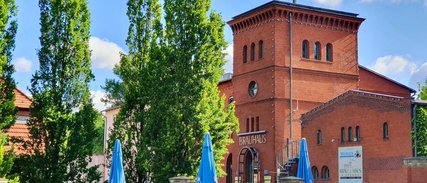
In Spandauer Kolk, the district’s oldest settlement area, the brewery has been housed since 1994 in a bright red brick building dating from the Imperial era. At the end of the 19th century, this was the site of the army laundry; all that remains are a tall chimney and a massive steam boiler.
Whether in the taproom or the cosy beer garden – 13 of the brewery’s own beers await thirsty palates not far from the banks of the Havel. The yeast-clouded Havelbräu is available all year round, whilst special beers such as Potz Blitz, Herbstbock Maronator or Spandauer Sommermärchen change monthly.
Those interested can take a guided tour to see the brewer at work. If you like, you can go straight from the taproom to bed – seven rooms and an apartment are available for weary beer lovers.
| Brauhaus Spandau | Neuendorfer Str. 1, 13585 Berlin |
| Altstadt Spandau underground station (U7), Falkenseer Platz bus stop (130, 137, M137) |
KulturBrauerei & Pfefferberg
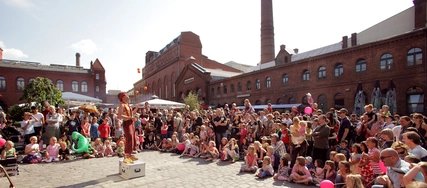
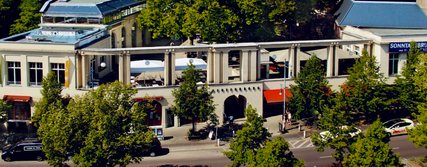
In the wild 1990s, East Berlin saw the heyday of creative conversions and temporary uses of former industrial sites. The former Schultheiß brewery – now the KulturBrauerei – and the former Pfeffer brewery (now Pfefferberg) have also reinvented themselves. Today, they rank among the district’s most important cultural venues and are home to restaurants, pubs, clubs, a museum, a cinema, theatres, studios, and more.
Joseph Pfeffer’s brewery was the first in the region to produce bottom-fermented beer. Even today, the kettles are still steaming here when Master Brewer Schoppe brews the popular varieties Flower Power IPA or Berliner Schnauze.
.
| Pfefferberg | Schönhauser Allee 176, 10119 Berlin |
| Senefelderplatz Underground Station (U2, N2) |


