

Berlin’s Animal Side
Experience the capital’s “jungle” up close by bike
As well as culture, water and green spaces, Berlin has yet another highlight to offer: many native and rare animal species thrive in the urban jungle. From goats and sheep, to chickens and water buffalo, right through to bats, ponies, mouflons and pigs – the diversity of Berlin’s fauna is impressive. Armed with a pair of binoculars and a few snacks, you can discover them on a wonderful day trip by bike in north-west Berlin.
Adventure playground and children’s farm

Our animal-themed discovery tour through Berlin begins not far from the Wollankstraße S-Bahn station in the Pankow district. On a former section of the Berlin Wall, staff and many volunteers have been creating a rural oasis in the heart of the city since 1991. You could almost think the Bremen Town Musicians have found a new home here: donkeys, cats, chickens and pigs live alongside many other animals at the Pinke-Panke children’s farm.
This place of adventure and learning offers plenty of space for young people and adults to gain hands-on experience of farm life in a playful way. As well as feeding the animals, you can watch and touch them, bake bread in the clay hut, learn traditional craft techniques, or sit on a bench with a pot of coffee in hand and enjoy country life. Once you’ve had a rest, the journey continues by bike on the longest leg of our animal-themed tour, heading west towards Reinickendorf.
Diverse natural surroundings from Lake Tegel to the wildlife reserve in Spandau

Before you can spot fallow deer, mouflons, roe deer and wild boars, you’ll first need to give the pedals a good go. The next stop is the game reserve in Spandauer Forst, a good 20 kilometres away. The route there is varied, though, and definitely worth the effort. After the first ten kilometres, you’ll come to the Borsigdamm, which offers a wonderful view of Lake Tegel. Now you continue straight on, always following the lake and through the southern part of the Tegel Forest. In Tegelort, you’ll then board the only car ferry still operating in Berlin. The ferry runs daily between Tegelort and Hakenfelde in the Spandau district. The Havel is 160 metres wide between the two banks, and the crossing takes just a few minutes. Of course, the ferry carries not only cars but also pedestrians, cyclists and, if you’re lucky, even horses.
Not far from the jetty in Hakenfelde lies the Spandau Forest, home to the Teufelsbruch nature reserve and the wildlife enclosure. Cycle on to Schönwalder Allee and leave your bike there. Walk a few metres into the forest; the extensive game reserve lies behind the forester’s lodge. The Spandau Forest is one of Berlin’s largest, most beautiful and most biodiverse woodlands. Whether you’re taking a stroll to the carp pond or doing a circular walk around the capital’s largest game reserve, you can now observe red deer and wild boar in their natural habitat at your leisure. If you walk through the forest with your eyes peeled, you may also spot other woodland dwellers such as badgers, raccoons and even kingfishers. Make sure you have your binoculars and camera to hand. A little tip: there’s a café in the wildlife reserve serving coffee and cake.
Rare animal species in the Tiefwerder meadows

Back on your bikes, head south along Schönwalder Allee towards Spandau’s old town. After this green idyll, a touch of urban life follows – from a distance, you can already see the tower of the imposing town hall. Just behind the station, Ruhlebener Straße takes you across the River Havel; a moment later, you leave the main road and continue on to Pichelswerder.
The island lies between Pichelssee and Stößensee; slightly to the north of it is the Tiefwerder Meadows landscape conservation area. This natural floodplain is criss-crossed by many old branches of the River Havel, and a wooden boardwalk runs right across the wet meadows. Spanning almost 70 hectares, the area provides a unique habitat for many rare plant and animal species. It is home to Berlin’s last pike spawning ground, and beavers have also re-established themselves here. As part of an alternative grazing scheme, water buffalo were introduced to the Tiefwerder Wiesen in 2011; patient observers can watch the even-toed ungulates as they bathe and graze.
Get a taste of country life at the Vierfelderhof
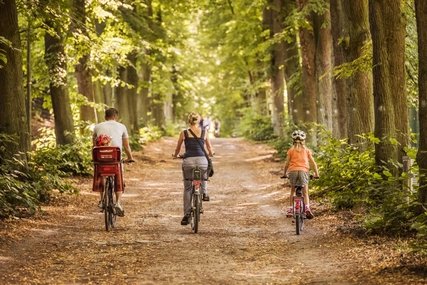
Our journey through the animal kingdom takes us further south, past the Scharfe Lanke and the Lanke Marina. Feel free to stop, take a deep breath and enjoy the view of the River Havel. The Havel Cycle Route now heads steadily south; once you’ve passed the Windmühlenberg, you’ll find the Vierfelderhof not far from the Kleine Badewiese. This children’s and family farm in Gatow is run as a charity and offers 90 hectares for outdoor enclosures for animal husbandry. Whether it’s ruminants, wild animals, rabbits, chickens, small creatures, wild plants or edible plants – at the Vierfelderhof, species-appropriate husbandry and care are a top priority. Country life therefore involves not only feeding and caring for the animals and plants, but also harvesting, mucking out the stables, building fences and nesting aids, and gathering wood.
All visitors can experience the rural working and living environment first-hand on the farm and learn to understand economic and social interrelationships. As well as gaining an understanding of regional economic cycles, you’ll also strengthen your consumer awareness. After this crash course in nature, every city-dweller will be well-equipped to tackle the urban jungle.
Incidentally, the Vierfelderhof offers all sorts of regional delicacies in its farm café. Before setting off on the final leg of your journey, you can refuel here and pick up a souvenir from the farm shop .
Please note: The Vierfelderhof has currently significantly reduced its services. It’s best to check the official website for the latest information before visiting.
Night-time walk with bats
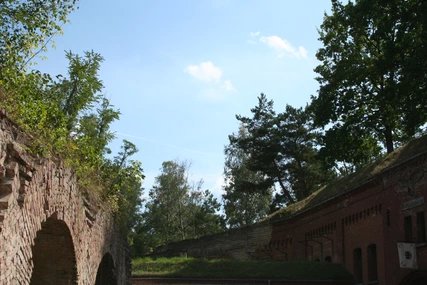
You’ll soon be told: talking is definitely allowed! That’s something the nimble bats – whom you’re about to meet – particularly enjoy. Before that, however, the final leg of our city expedition takes us cross-country through the Karolinenhöhe irrigation fields up to Fort Hahneberg. Until the fall of the Berlin Wall, Germany’s last newly built fortress, situated near the Heerstraße border crossing, lay dormant for decades – allowing flora and fauna to flourish unhindered. As a result, the fort has also become an important roost for bats. Guided tours are offered at dusk, during which you can learn a great deal about the habitat, the various species, hunting habits and echolocation systems of these unique mammals. For the tour, you should bring sturdy footwear and a torch, and book your ticket online in advance. The guided tours are very popular and often book up quickly.
With so many fascinating animal encounters to reflect on from the day, you can now cycle down the Hahneberg to Berlin-Staaken station. The regional trains will take you and your bike to Spandau’s old town or to Berlin Central Station.
Tour information:
- Start: Pinke-Panke Children’s Farm, Pankow
- Finish: Fort Hahneberg, Spandau
- Tour duration: one day (including sightseeing and breaks; note: to avoid the first longer stage, the tour can also start from a later point)
- Cycling distance: approx. 43 km, around 2.5–3 hours’ cycling time
Dining tips
- Hot chocolate, coffee and cake at the café on the grounds of the Pinke-Panke Children’s Farm
- Café Gartenlaube on the grounds of the Evangelisches Johannesstift
- Kiosk by the small bathing meadow

