

Museum Island Berlin
The UNESCO World Heritage Site in the heart of the capital
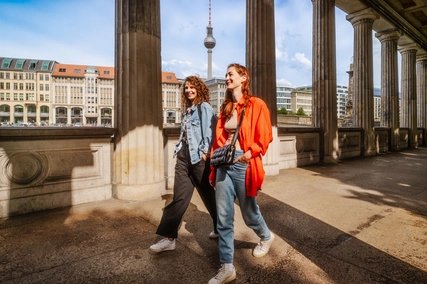
No visit to Berlin is complete without seeing it: Berlin’s world-famous Museum Island, in the heart of the capital, is one of the city’s most important attractions and has been a UNESCO World Heritage Site since 1999. The unique, outstanding art collections of the five historic museums showcase artefacts spanning many millennia of European cultural history.
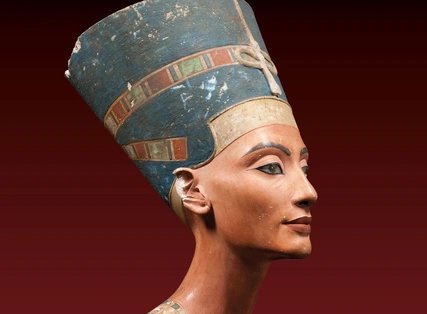
Highlights include the world-famous, 3,000-year-old bust of the Egyptian Queen Nefertiti, the gigantic ancient Pergamon Altar (on display again in June 2027), the Berlin Gold Hat, the most famous paintings by Caspar David Friedrich and Donatello’s Madonna Pazzi.
On 4 June 2027, Museum Island will celebrate a long-awaited reunion: the Pergamon Museum will reopen its doors to you and once again showcase a large part of its treasures – fully restored and presented in a completely new way!
An overview of the museums
The island's buildings
5
Neues Museum (New Museum)
Bodestraße 1, 10178 Berlin DE, Deutschland Learn more To the route plannerTitle
Subtitle
Content
Neues Museum
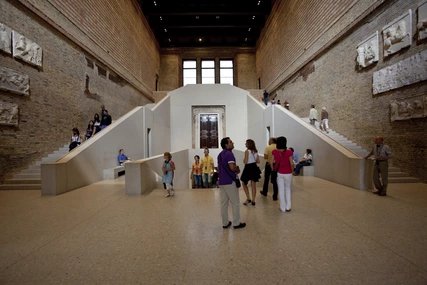
The Neues Museum (1855) is now an elegant reconstruction, inaugurated in 2009, by the British star architect David Chipperfield: he did not simply rebuild it, but added his own impressive elements to the historic parts of the building. The Neues Museum houses the Egyptian Museum and Papyrus Collection, the Museum of Prehistory and Early History, and the Collection of Classical Antiquities.
Highlights:
- Bust of Queen Nefertiti (14th century BC)
- Cube-shaped figurine of an Egyptian priest (14th century BC)
- ‘Berlin Gold Hat’ (c. 1000 BC)
- Roman bronze statue ‘Xanten Boy’ from the decades around the birth of Christ.
Our tip: Discover a reflection
Nefertiti was known as a ruler who, together with her husband Akhenaten, worshipped only the god of light and introduced a vast sun cult throughout the land. She stands in a glass display case in the hall beneath the north dome. Directly opposite, in the hall beneath the south dome, 80 metres away, you’ll find the colossal statue of the Greek sun god Helios. Look back from there and you’ll see how he is mysteriously reflected in the glass case of the sun-worshipper…
Old National Gallery
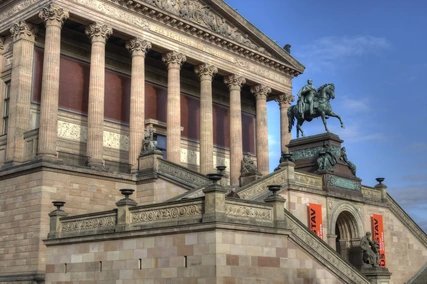
The Old National Gallery (1876) makes an immediate impression with its classical architecture, modelled on an ancient temple. Here you can see masterful art from the 19th and early 20th centuries – works created between the French Revolution and the First World War, and spanning the periods of Classicism and the Secession.
Highlights:
- Painting by Caspar David Friedrich, ‘Monk by the Sea’ (1808–1810)
- Sculpture ‘Group of Princesses’ (1795–97) by Johann Gottfried Schadow
- Painting ‘The Isle of the Dead’ by Arnold Böcklin
- Sculpture ‘The Thinker’ (1881–83) by Auguste Rodin
Our tip: The best way to go about it
It’s worth proceeding in chronological order. Start on the third floor and finish your tour on the ground floor. You can easily take the lift (which also goes directly to the basement to the toilets, the shop and the café); it’s just a bit hidden, so do ask the friendly attendants.
Pergamon Museum (reopening in June 2027)
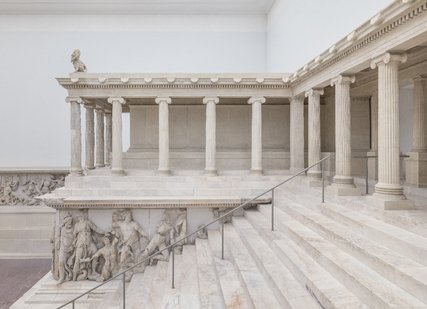
The Pergamon Museum (1930) will largely reopen on 4 June 2027 following extensive renovation work . It houses the Collection of Classical Antiquities, featuring world-famous architectural masterpieces, the Museum of Islamic Art and the Museum of the Ancient Near East. In 2027, you’ll be able to see many of the key highlights again: the Pergamon Hall with its altar and the Great Frieze, the Collection of Classical Antiquities and the Museum of Islamic Art – all state-of-the-art and covering twice the floor space as before.
Highlights:
- World-famous Pergamon Altar (180/160 BC)
- Greek mosaic featuring Alexander’s parakeet (160–150 BC)
- Monumental façade of the Caliph’s Palace at Mschatta (mid-8th century AD)
- Alhambra dome from Granada, Spain (1320)
- Aleppo Room from Syria (early 17th century AD)
Our tip: Experience ancient Pergamon up close
If you’d like to get a taste of ancient Pergamon and its masterpieces before the museum reopens, visit the exhibition ‘Pergamon Museum: The Panorama’, featuring numerous original artefacts from the ancient metropolis and Yadegar Asisi’s 360° panorama. And find out which object the Director of the Collection of Classical Antiquities on Museum Island considers the most beautiful:
Altes Museum
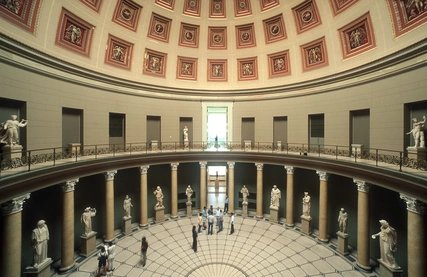
The Altes Museum ( 1830) was the first museum building on the island. It was here that the royal art collections were first displayed to the public. Today, countless masterpieces of Classical Antiquity are on display in this building, with its classical-style architecture and circular domed hall: sculptures and jewellery, vases and coins from the Greek and Etruscan periods and the Roman Empire.
Highlights:
- Portraits of Caesar and Cleopatra
- Sculpture of the Wounded Amazon
- Funeral stele of a girl, the ‘Giustiniani Stele’
- ‘Berlin Goddess’
Our tip: Have the most beautiful stele explained to you
Stand in front of the Giustiniani Stele in Room 7 and experience how the finest sculptural art combines with an expression of deep mourning. Let the former museum director, Andreas Scholl, personally introduce you to the relief, which he declared to be his favourite piece:
Bode Museum
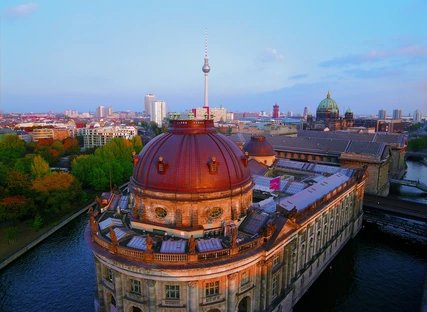
The Bode Museum ( 1904), picturesquely flanked by the River Spree, is situated at the tip of Museum Island. It houses a unique collection of European sculpture, featuring works from the Middle Ages to the 19th century , complemented by numerous paintings from the Gemäldegalerie. The Museum of Byzantine Art and the Numismatic Cabinet showcase further treasures.
Highlights:
- Satyr with Panther by Pietro Bernini (1615)
- Dancer by Antonio Canova (1809/12)
- Madonna Pazzi by Donatello (1420)
- Mosaic icon depicting Christ the Merciful (12th century)
Our tip: Discover the Baptistery of Siena in Berlin
Beneath the Small Dome of the Bode Museum lies a minor sensation: Don’t miss the chance to walk around the detailed plaster model of the Siena baptismal font , which stands over five metres tall, and admire the small original bronze sculpture of the ‘Putto with Tambourine’, created by Donatello in 1429.
Around Museum Island: What else you can discover
PETRI Berlin: The archaeology lab on Gertraudenstraße invites you and your children to immerse yourselves in the fascinating world of archaeology in a new, interactive way! PETRI is a unique collaboration between the Museum of Prehistory and Early History (in the Neues Museum on Museum Island) and the Berlin State Office for the Preservation of Historical Monuments.
James-Simon-Galerie: This is Museum Island’s modern visitor centre and regularly hosts the island’s top exhibitions.
Pergamon Museum. The Panorama: Just opposite (on Am Kupfergraben), this extraordinary exhibition with its 360° panorama takes you on an impressive journey back to Roman antiquity. Experience the city of Pergamon on the west coast of Asia Minor in its former splendour and authentic vibrancy.
Friedrichswerder Church: Built by Karl Friedrich Schinkel in 1830 and situated in the immediate vicinity, the church now serves as an exhibition space for the Alte Nationalgalerie and displays more than fifty sculptures bathed in the shifting light filtering through its neo-Gothic windows.
The unique history of Museum Island
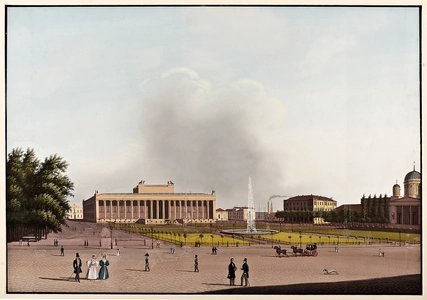
100 Years of Architectural History
The Altes Museum, built in the Neoclassical style, was the first building to be erected on Museum Island and was inaugurated in 1830. King Frederick William III commissioned Karl Friedrich Schinkel, Prussia’s most eminent architect, to design the building: For the first time, the King’s historically significant art collections were to be made accessible to the entire population of Berlin. The idea of a museum open to all dates back to the Age of Enlightenment and its educational ideals.
By 1855, a second imposing museum building had been erected according to the plans of the eminent architect Friedrich August Stüler what is now the Neues Museum. In 1876, the Alte Nationalgalerie opened, a building whose architecture is reminiscent of Greek temples and which also incorporates designs by Stüler. It was not until the beginning of the 20th century that the complex was completed. In 1904, the neo-Baroque‘Kaiser-Friedrich-Museum’ opened at the tip of Museum Island – now known as the Bode Museum. And in 1930, the Pergamon Museum was added as the last of the five major exhibition buildings; its architecture is entirely geared towards the monumental structures on display there.
The Nazis planned a colossal redevelopment, which fortunately could not be carried out. After the war , Museum Island was a landscape of ruins; the Neues Museum, in particular, was almost completely destroyed. Reconstruction began during the GDR era, but the Neues Museum remained a ruin for a long time.
The ‘Museum Island Master Plan’
Following the fall of the Berlin Wall, the Foundation Board decided in 1999 to undertake a comprehensive renovation of the complex, known as the ‘Museum Island Master Plan ’. This included the reconstruction of the Neues Museum and the restoration of the other museums.
The individual museum buildings, each facing a different direction, are being linked to form a single, cohesive whole: the Archaeological Promenade is currently under construction. In future, it will form a barrier-free link between the buildings, stretching from the Altes Museum via the Neues Museum and the Pergamon Museum to the Bode Museum, and will display significant objects from the art collections.
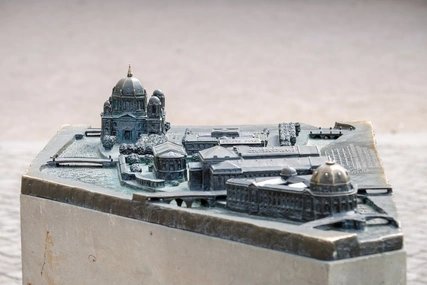
Our tip: Take a look at the informative and detailed model of Museum Island in the basement of the James Simon Gallery.
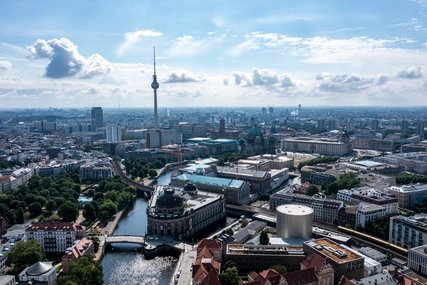
2019: The James Simon Gallery is inaugurated

The James-Simon-Galerie is Museum Island’s new, modern visitor centre and exhibition venue. The British star architect David Chipperfield was commissioned to design the James-Simon-Galerie. His firm, David Chipperfield Architects, had previously overseen the reconstruction of the Neues Museum. The gallery is named after James Simon (1851–1932), a Jewish citizen of Berlin and passionate art collector, who is being honoured in this way for the first time. He was the most significant patron of Museum Island, and it was from him that Berlin’s museums received extensive collections. His most famous – and to this day controversial – donation to Museum Island is housed beneath the north dome of the Neues Museum: the bust of Nefertiti.
The future of Museum Island
Gradual reopening of the Pergamon Museum: what you can see and when
4 June 2027:
• The Altar Hall with the famous Pergamon Altar and the Great Frieze – you can climb up onto the altar structure!
• The Hall of Hellenistic Architecture with masterpieces from the Collection of Classical Antiquities – be captivated by the large sculpture of Athena Parthenos!
• The Museum of Islamic Art, featuring the Mschatta Façade and the Aleppo Room – new, interactive and with double the exhibition space!
The 2030s:
• The Ishtar Gate with the Processional Way of Babylon
• Market Gate of Miletus
By 2030: The 200th anniversary of Museum Island is celebrated
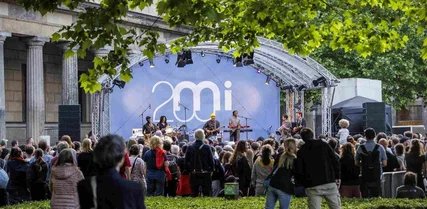
Museum Island in Berlin, a UNESCO World Heritage Site and home to spectacular art treasures, is celebrating its anniversary: 200 years ago, the history of this globally unique ensemble of buildings, surrounded by the River Spree in the heart of Berlin, began.
Over the course of five years, the five major museums will be hosting fascinating special exhibitions, music events and educational programmes. The Alte Museum, the first museum on the island, kicked off the celebrations in 2025. In 2026, the focus is on the Alte Nationalgalerie, which was officially opened 150 years ago and is presenting exciting exhibitions throughout the year.
The highlight of the anniversary celebrations will be next year, when the Pergamon Museum reopens on 4 June 2027 .
FAQ
What are the most important works of art on Museum Island?
- Bust of the Egyptian Queen Nefertiti (Neues Museum)
- Pergamon Altar (Pergamon Museum, on display again from June 2027)
- Berlin Gold Hat (Neues Museum)
- Caspar David Friedrich’s *Monk by the Sea* (Old National Gallery)
- Donatello’s Madonna Pazzi (Bode Museum)
Where can I find Nefertiti?
You’ll find the bust of Nefertiti in the Neues Museum, in the North Dome Hall on the upper floor.
How much time do I need for Museum Island?
Museum Island is large. To get a general overview, you should allow 4–6 hours, including breaks. If you’d like to explore individual museums in more depth, you’ll need at least a full day.
Are there any activities for children?
Yes, plenty in fact: in every museum you’ll find guided tours, exhibition talks and workshops specially tailored to children and families: Museum Island’s activities for children
Special tip: Do take a look at what Haus Bastian has to offer. In the educational workshop right opposite Museum Island, children can express and process their impressions through creative painting, crafts, building and free artistic expression.
Where can I take the perfect photo?
Our tips:
- Old National Gallery, stairwell, first floor, photographing through the tall window: you’ll capture a panoramic view featuring the monumental equestrian statue from behind and Berlin Cathedral in the frame.
- James-Simon-Galerie, grand entrance staircase: Ideal for posing and group photos
- Bode Museum, café on the gallery: A fantastic view of the historic domed architecture and down onto the metre-high equestrian statue of the Great Elector
- Insider tip: James-Simon-Galerie, large glass window behind the cloakroom: if you stand right in front of the pane for a selfie, it looks as though you’re about to fall straight into the Spree, which flows behind it...
What’s there to experience outside on the island?
- The Kolonnaden Bar, with deckchairs by the Spree, is open in summer: free concerts, performances, DJ sets – and the island’s own beer, ‘Wissensdurst’
- The Lustgarten in front of the Altes Museum is the perfect spot to take a break and relax amongst the greenery
Where can I eat?
- Café in the Bode Museum (coffee & cake, fantastic view from the gallery into the dome and of the equestrian statue)
- Café & Restaurant Cu29 in the James-Simon-Galerie (lunch & coffee with cake, early-evening aperitifs, views of the River Spree)
- Bistro Lebenswelten in the Schlüterhof/Humboldt Forum (wide selection of meals, plenty of seating indoors and outdoors)
What sights are there in the immediate vicinity?
Berlin Cathedral with the Hohenzollern Crypt ( right next to the Lustgarten)
Humboldt Forum (directly opposite, on Unter den Linden)
German Historical Museum (Unter den Linden)
GDR Museum (on the other side of the Spree)
Neue Wache (on Unter den Linden)
How do I get to Museum Island?
The best way is to use public transport:
- Bus routes 100 and 200, Lustgarten stop
- Underground line U5, Museumsinsel station
If you are travelling by car and require a disabled parking space, please find out more here:


