

The Lichtenberg art scene
Creative art amid old industrial buildings and Wilhelminian architecture
Artists and creative types have been drawn to Lichtenberg for quite some time now. Amidst unused industrial spaces and Wilhelminian-style architecture, Lichtenberg's art scene has been steadily evolving for decades and is just waiting to be discovered.
The Mies van der Rohe House

An architectural icon of the district was Ludwig Mies van der Rohe, who worked in Lichtenberg in the 1930s and designed the Lemke House on Obersee. The L-shaped detached house made of red bricks, also known as Landhaus Lemke or Mies van der Rohe House, is the last residential building designed by the architect in Germany before he emigrated to the USA. Today, the house at Oberseestraße 60 welcomes art lovers from all over the world as an internationally renowned architectural monument and serves as an exhibition venue for contemporary art.
Galleries in Lichtenberg
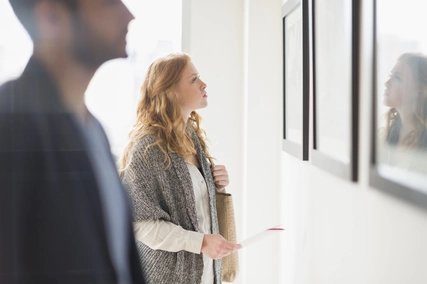
No other district in Berlin has as many municipal galleries as Lichtenberg.
In the historic rooms of the former Ratskeller Lichtenberg, the rk-Galerie für zeitgenössische Kunst (rk Gallery for Contemporary Art) presents five to six multimedia exhibitions each year. The paintings, photographs, sculptures and installations on display address socially relevant topics. Accompanying art salons, workshops and guided tours also provide insight into the creative processes behind the works.
Meanwhile, the studio im HOCHHAUS takes a visionary and utopian approach. Since 1990, the art exhibitions on the ground floor of a high-rise building in the middle of the large housing estate of Neu-Hohenschönhausen have been stimulating discourse between the realities of urban life and expectations of coexistence in a large housing estate.
In the Karlshorst district, the gallery in the Kulturhaus Karlshorst attracts visitors. The Kulturhaus's varied programme focuses on interculturalism and showcases national and international works of contemporary painting, graphic art and photography. Above the exhibition rooms, on the first floor of the Kulturhaus, concerts, plays and readings take place regularly.
Since 2019, the artist-run Freie Kunstraum GISELA has been enriching the scene with abstract and figurative painting, photo and video art, sculptures and room installations. With exhibition tours, discussions with artists, lecture series and workshops, the Kunstraum invites visitors to broaden their own artistic horizons.
Where there used to be a butcher's shop, after the butcher now shows exhibitions, performances and films about the social here and now. Since 2025, an association of artists and theorists has been curating the international exhibits. The programme thrives on artistic strategies, social issues and critical reflection on social contradictions.
The DDR Fotoerbe initiative preserves over a million analogue photographs that authentically document everyday life in the German Democratic Republic, far removed from propaganda. The images are presented in regular exhibitions throughout the city.
Curtain up for the stages of Lichtenberg
Lichtenberg has a vibrant theatre culture with a neighbourhood character. Stories come to life on the district's stages – from children's dreams to experimental puppetry.
Since 1950, the Theater an der Parkaue has been enchanting young visitors aged four and above. In a former school building in the heart of Lichtenberg, classic fairy tales, modern plays and innovative productions are brought to the stage. As Germany's oldest theatre for children and young people, the theatre combines a varied programme with workshops and other participatory formats for children and young people.
In the spacious theatre in north-east Lichtenberg, puppets fly, dance and swim through the stage set of a former pioneer house. Although the theatre is dedicated to puppetry, it also offers itself as a venue for any other form of theatre and interactive installations.

Theater Strahl has been staging contemporary theatre for young audiences since 1987. In a listed two-storey gymnasium, the productions deal with the fears and hopes of the younger generation. In addition to the performances, the ensemble is involved in mobile productions and theatre education projects throughout Berlin.
Alternative art in historic locations
In Lichtenberg, art is not only exhibited, but also created! A former railway depot, a margarine factory from 1909 and former restricted areas from the GDR era serve as historic backdrops for the work of local artists.
The BLO studios are located at the Nöldnerplatz S-Bahn station.

Since 2003, artists and craftspeople have been working here on the site of a former railway depot. The site can be explored during the annual open day and at regular concerts and exhibitions.
In the middle of the Herzbergstraße industrial estate, the Fahrbereitschaft gallery presents its Haubrok collection in the halls of a spirit factory that opened in 1901. The gallery owes its name to its GDR past: the 18,000 square metre site once served as the motor pool for the GDR Council of Ministers. Since 2013, the venue has brought together workshops and studios for artists and creative professionals with an exhibition space for international contemporary art. Between linoleum floors and floral wallpaper, the works from the renowned Haubrok family collection unfold an artistic dialogue between the present and the past.
In addition, Positive Vibes Berlin offers guided tours of the studios and art venues around Herzbergstraße, providing an in-depth insight into the creative scene of this historic area.
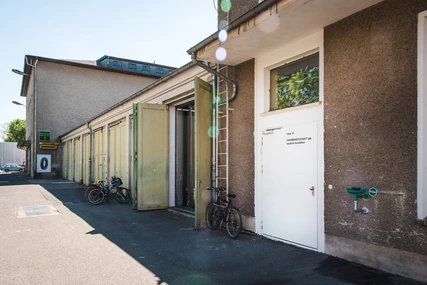
Other creative hotspots: The former "Margarinewerk Berolina" from 1909 now houses the HB55 art factory, the "Centre for Artistic and Artistic Crafts Workshops". The Alte Gießerei Berlin e. V. has breathed new life into a vacant factory with a diverse range of exhibitions, workshops, readings, screenings and discussion groups. And where the Ministry for State Security once had spy equipment developed, the artists of ID Studios (Intelligence Department Studios) now create their works in around 270 studios.
Just around the corner, in the halls of a former machine factory, are the exhibition rooms of the Villa HEIKE art association. The listed building, which was built in 1910 by the machine manufacturer Richard Heike, previously served as a secret Nazi archive for the Stasi. Today, temporary art projects with a special focus on the medium of photography are exhibited in the carefully renovated premises. In addition to the exhibition space, Villa Heike also offers studios and workspaces for creative professionals.
The Lichtenberg Youth Art School opens doors for young talents: professionally equipped workshops enable anyone interested to try their hand at various art forms in workshops and open studios. The art school's exhibition space showcases the creative skills and artistic perspectives of the district's children and young people.
Lichtenberg craftsmanship
Tradition and innovation come together in the backyards and former factory buildings of Lichtenberg. In their workshops and studios, Lichtenberg's creative industries produce handmade furniture, artistic porcelain, unique jewellery and tailor-made clothing. Here, long-established craft businesses preserve their traditions, while right next door, young creatives reinterpret techniques and materials.
Lichtenberg craftsmanship can be experienced up close, as many workshops open their doors for workshops and behind-the-scenes insights. Berlin Bumerang , for example, has been producing boomerangs that are unique worldwide for 25 years now.

The wood workshop is located in the B.L.O. studios and can also be used by visitors as part of boomerang workshops, where they can build their own flying objects. Berlin Bumerang's throwing courses then allow participants to perfect their flight curve.
The wood scraps produced at Berlin Bumerang are artfully recycled right next door in the WerksAtelier. Since 2020, Tobias Rudolph's workshop has been all about filigree wooden rings and matching ring boxes. With an extensive catalogue of ergonomic pocket knives, the trained aircraft builder also makes some of his own tools.
‘Turning old into new’ is the motto at Marija Jaensch’s studio in the Kaskelkiez neighbourhood of Lichtenberg. Her quilted wall hangings, cushion covers and soft toys, made from existing materials, bridge the gap between different eras and styles in art history. Fabrics with a history of their own are put to use at Jawoll Baby. Founded in 2021, this upcycling company creates timeless children’s clothing from the wool salvaged from old woollen jumpers. Founder Janine offers insights into her craft through upcycling workshops.
Lichtenberg’s creative minds are an integral part of Berlin’s manufacturing landscape. Yet unique products are also being created in traditional craft workshops and innovative design studios across the city’s other districts. Anyone wishing to find out more about the city’s manufacturers and craft businesses can visit Crafted in Berlin foran overview of Berlin’s maker scene.