Tiergarten
Berlin’s large recreational park in the heart of the city
The Tiergarten stretches between Berlin’s main attractions, such as the Brandenburg Gate and Berlin Zoo, and surrounds landmarks such as the Victory Column: this large, sprawling park in the heart of Berlin offers you a vast green oasis for relaxation and recreation – as well as plenty of culture: discover numerous historical monuments, as well as impressive sites commemorating recent history.
Right in the city centre
For Berliners, Tiergarten Park is the city’s green lung – just like New York’s Central Park or London’s Hyde Park. Close to the city centre and bordering such major sights as the Brandenburg Gate or Potsdamer Platz, the forested grounds cover a spreading 210 hectares, nearly 519 acres – slightly more than Hyde Park.
Tiergarten Park is very much at the heart of Berlin life – attracting joggers, skaters, cyclists and walkers, as well as those who just want to relax in the sun. The park’s spreading green lawns are popular for family picnics, ball games or simply unwinding and taking it easy – an ideal place to recharge your batteries on a break from some serious shopping or seeing the sights.
A stroll through the Tiergarten
Tiergarten Park not only offers winding tree-lined paths and open green spaces, but is also home to many interesting memorials as well as cultural and political sights. Close to the Brandenburg Gate, you can find the Soviet war memorial and the Global Stone peace project. Further on into the park, the arts and exhibition centre Haus der Kulturen der Welt is set attractively on the banks of the River Spree. The Office of the Federal President adjacent to Bellevue Palace, the official residence of the President of Germany, is to the west. Here too, you can find the Victory Column (Siegessäule) with its panoramic views of the city.
For a waterside location, the Café am neuen See to the south is set on the shore of a small lake. The café’s beer garden is open almost all year round – and if it’s too cold to enjoy sitting outside, you can warm yourself by the fire indoors. From here, it’s only a short walk to the German Resistance Memorial Centre or the memorials for political activists Karl Liebknecht and Rosa Luxemburg.
The sound of music in the park – every Sunday in summer!
Summer visitors to Tiergarten Park on a Sunday might well hear the sound of a rather unusual musical instrument – the bells played by a carillon. Built close to today’s Haus der Kulturen der Welt, the carillon in Tiergarten Park was opened in 1987 as part of Berlin’s 750th anniversary celebrations. The tower, which soars 42 metres high, has 68 bells – making it the world’s fourth largest carillon.
History: From the hunting grounds of the aristocracy to Berlin’s ‘green lung’
At the end of the 17th century, Elector Frederick III transformed the former hunting grounds into a ‘pleasure park for the people’. Since then, the Tiergarten has been redesigned time and again. The most significant redesign to date is undoubtedly that carried out by Peter Joseph Lenné. Between 1833 and 1838, he redesigned the park into a public park modelled on the English style.
Tiergarten Park was badly damaged during the Second World War, especially in the fierce fighting around Berlin in the last year of the war. But it also suffered dramatically in the wake of the war. Facing an acute lack of coal in winter 1945/6, Berliners cut down what was left of the park’s trees as fuel, nearly deforesting the entire area. Tiergarten Park was replanted with trees from 1949, largely thanks to the many donations of trees from across Germany.
Image gallery

View across the Tiergarten

Relay at Tiergarten
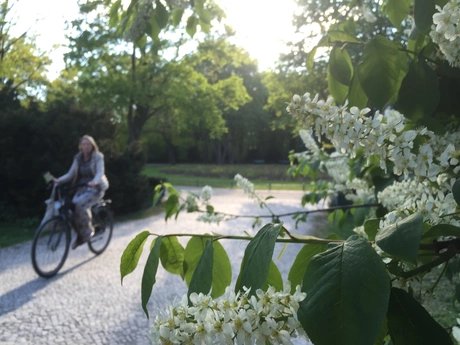
Tiergarten - Spring
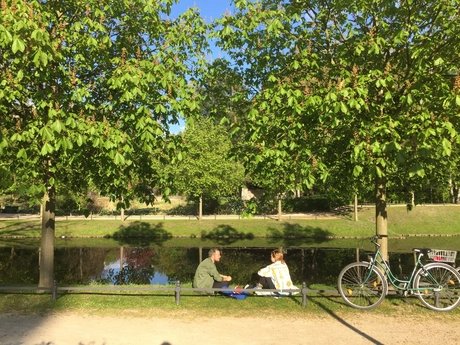
Tiergarten - Summer
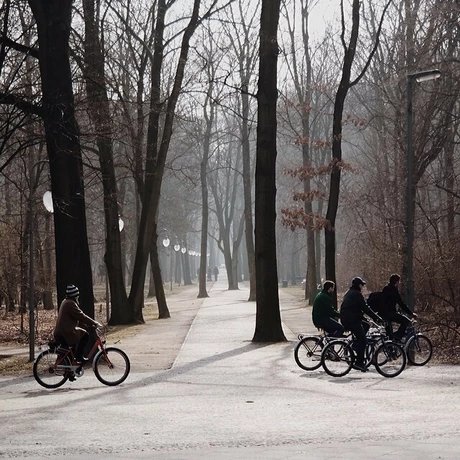
Tiergarten - Winter

Victory column in autumn