
Taking a holiday whilst living mindfully is something you can do in many places across Berlin. You’ll find activities that invite you to explore and get involved. We’ve put together some tips to make your stay varied, from shopping and dining to unique experiences.
Here are 11 places where you can find fresh inspiration and take home ideas for a more mindful everyday life.
Tip 1: Try your hand at survival training at Ökowerk
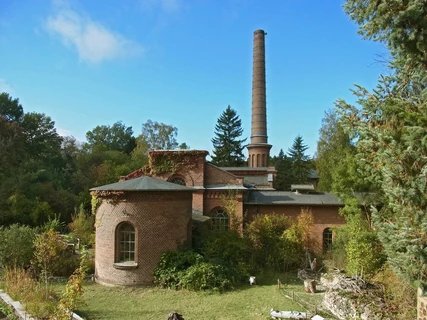
Located by Teufelssee in the Grunewald, the Ökowerk is Berlin’s oldest listed waterworks. Over 30 years ago, the Naturschutzzentrum Ökowerk e.V. association began its work to preserve biodiversity in the Grunewald through numerous biotopes. Explore the walls of the historic waterworks and learn about aquatic life, discover historic fruit and vegetable varieties in the gardens, and take part in survival training in the great outdoors . The Ökowerk is a unique place of learning and discovery, particularly for children, where they can try out, build and grow all sorts of things for themselves.
Tip 2: Enjoy plant-based cuisine at Restaurant HAPPA
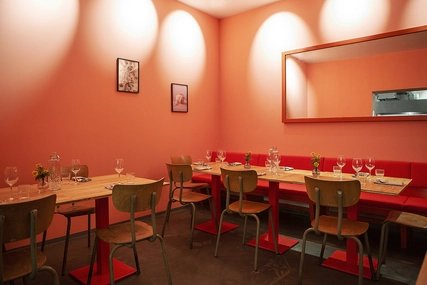
If you’d like to discover Berlin’s culinary scene, then you should definitely pop into HAPPA. This charming restaurant in the heart of Kreuzberg offers creative, plant-based cuisine with changing menus. Among other things, seasonal ingredients are used. If you’re interested in gastronomic concepts that do without animal products, you can try out various dishes here.
The Flinta* team at HAPPA is, of course, led by two women: Sophia Hoffmann is a vegan chef who has already published four cookbooks on the subject and shares her knowledge through talks and workshops. Together with Nina Peters, who prior to HAPPA opened Germany’s first ‘leftover restaurant’ in Neukölln in 2016 as part of the ‘Restlos Glücklich’ team, she developed the idea and concept for the HAPPA restaurant.
When: Tuesday to Friday 6pm–10pm; Saturday 7pm (by ticket only)
Tip 3: Get informed about climate change
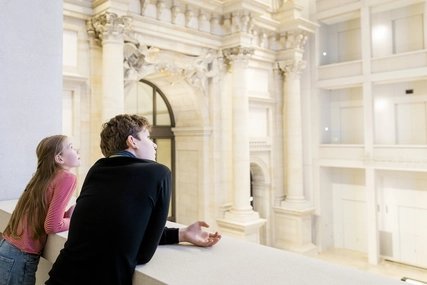
In the current exhibition “After Nature”, the Humboldt Laboratory at the Humboldt Forum explores how political systems impact nature and the environment. In a sort of modern cabinet of curiosities, a wide range of research approaches dealing with human-environment systems are presented. How are societal crises and crises in nature intertwined? How do environmental and resource issues interact with political systems? What impact does the liberal social model, with its promise of prosperity and progress, have on nature?
Guided tours of the exhibition are available in English and German, as well as special family activities. You can also explore the exhibition on your own using your smartphone with the media guide tour.
When: daily 10.30 am – 6 pm
Where: Humboldt Forum, 1st floor, Schlosspatz, Mitte
Tip 4: Repair and upcycle at the "Haus der Statistik"

After standing empty for over ten years, the "Haus der Statistik" has now developed into an inspiring model project. Based on the public-interest-oriented concept for the site, a whole host of initiatives and workshops have established themselves, demonstrating how materials can be creatively reused and objects repaired. In various workshops, for example, you can learn how to upcycle bags from packaging materials, restore vintage furniture and fix broken items yourself – from radios to bicycles. If you’re keen for more, you’ll find materials and inspiration at the construction and creative market, and can chat with like-minded people at the open textile workshop or in Café Essbar.
Tip 5: Conscious shopping at the Steglitz natural goods store
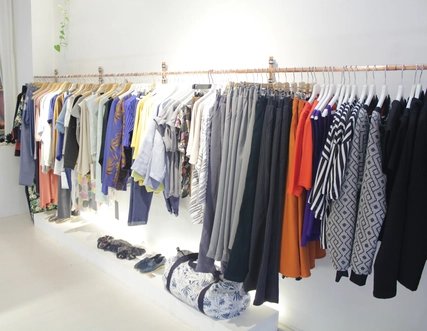
Germany’s largest natural goods department store is located on Schloßstraße in Steglitz. Spanning over 4,000 square metres, you’ll find a wide range of products here – from home textiles and natural cosmetics to bags, children’s toys and delicatessen goods. Many products stand out for their carefully selected materials, transparent sourcing or unique production methods. Anyone looking for a varied shopping experience away from the big chains will find what they’re looking for here.
Tip 6: Find treasures at the NochMall second-hand store
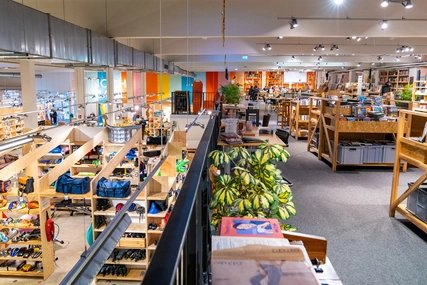
“Everything but new” is the motto at the second-hand shop run by Berliner Stadtreinigung (BSR). Across around 2,500 square metres, you’ll find furniture, clothing, books, toys and many other items that can be reused.
In workshops, you’ll learn how to creatively repurpose second-hand items. The offering is complemented by events focusing on topics such as reuse and resource conservation.
When: Monday to Saturday 10am–6pm, Thursday 10am–8pm
Where: NochMall, Auguste-Viktoria-Allee 99, Reinickendorf
Tip: You can also go on a treasure hunt at Berlin's numerous flea markets. Here, books, household goods, antiques and second-hand fashion change hands. Perhaps you’ll find a very special memento of Berlin here too?
Tip 7: Discover Tempelhofer Feld
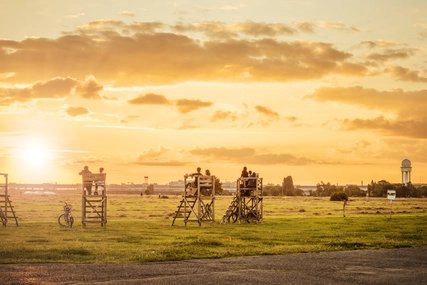
Tempelhofer Feld is one of the largest inner-city open spaces in Europe and a popular meeting place for Berliners and visitors alike. On the former airport grounds, you can cycle along the runway or jog or skate along the six-kilometre route around the field. There are baseball and volleyball pitches, barbecue areas, beer gardens, coffee bikes, toilets, a large dog park and, above all, plenty of open spaces for picnics and leisure activities. As well as sport and relaxation, you can fly kites here or simply enjoy the view across the vast expanse. The Allmende-Kontor e. V. community garden is also home to an urban gardening project where people garden together.
Tip: You can read about all the other things you can do in our 11 tips for Tempelhofer Feld.
The open meadows also provide a habitat for various native animal and bird species, in harmony with Berlin’s urban sheep, which you can also visit here. On urban ecology tours organised by Campus Stadtnatur, you can visit the shepherd or learn more about the history & special features of the site and its development into a nature and recreation area.
Tip 8: Urban gardening with a view

The Prinzessinnengärten at the Neuer St. Jacobi Cemetery in Neukölln, as well as the Klunkerkranich in Neukölln, are among the best-known urban gardening projects in Berlin.
The team at Gleisbeet, a community permaculture project on the site of the former Wriezen railway station in Berlin-Friedrichshain, regularly offers workshops on balcony gardening, practical gardening and topics such as permaculture.
The Klunkerkranich on the roof of the Neukölln-Arkaden is also well worth a visit. As well as views over the city, you’ll find a roof garden with plants and an outdoor bar here. A small entrance fee is charged for access to the bar.
Tip 9: Take a stroll to Berlin’s oldest tree
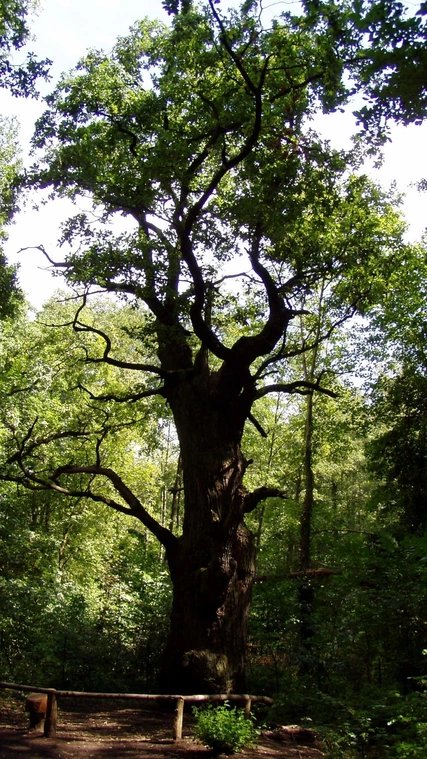
Berlin’s oldest tree stands in the Tegeler Forst, a recreational area in the north-west of the capital. The gnarled English oak is said to be over 900 years old. The old lady got her name from the brothers Wilhelm and Alexander von Humboldt, because the tree reminded them of their portly cook. Not far from ‘Dicke Marie’, the writer and the naturalist are buried in Tegel Palace Park.
Tegel Forest also invites you to go for a walk or a bike ride in the tranquillity of nature, and on hot days you can enjoy a swim in Lake Tegel.
Here too: please treat nature with respect and take your rubbish home with you.
Tip 10: Berlin is buzzing – try some sweet honey from the capital

Fans of Maya the Bee and Willi take note, because the capital is buzzing too. Honey is produced at various locations across the city, whilst knowledge about bees and their role in pollination is shared.
You’ll find beehives, for example, on the roof of Berlin Cathedral (Berliner Dom), on the roof of the German Parliament building, the Haus der Kulturen der Welt, at Tempelhofer Feld, at Jagdschloss Grunewald (Hunting Lodge Grunewald) or at the Planetarium at Insulaner. Some of these locations are freely accessible, whilst others can be visited as part of guided tours or events.
You can buy honey from Berlin beekeepers and take it home from selected shops and establishments. For example, at Café Botanico, where produce from their own garden is also used. At Domäne Dahlem, there is also an educational apiary offering regular workshops on bees and beekeeping.
Tip 11: Discover innovations relating to climate and resources in Berlin
In Berlin, numerous initiatives, companies and research institutions are engaged with topics such as climate protection, resource use and the circular economy. The spectrum ranges from repair and recycling services to technology-focused start-ups and research projects.
One example is the work of EIT Climate-KIC: together with partners such as TU Berlin, start-ups and companies, programmes are developed that address solutions to current climate challenges. The EUREF Campus in Berlin-Schöneberg also serves as a hub for projects focusing on energy, mobility and urban development. The cafés and bistros on the site are open to the public.
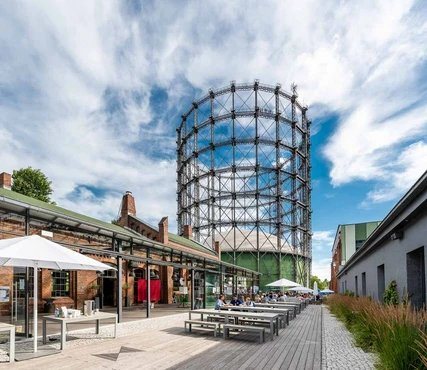
The historic gasometer is now an event venue. To enjoy the view over Berlin from the Skywalk, you’ll need to book a group tour. On selected dates, individual tickets are also available for guided tours, during which you can also visit the exhibition on the history of the gasometer.
By the way: the EUREF Campus Berlin has been meeting the German government’s climate targets for 2045 since 2014 and is certified as as Sustainable Meetings Partner Berlin.
And a few more tips:
- Bring a reusable water bottle with you. In Berlin, there are plenty of places to refill your bottle whilst out and about. In the city centre, there are public drinking fountains where you can fill up with water for free. Many cafés and restaurants also take part in initiatives such as ‘Refill Berlin’ and will refill your bottle with tap water free of charge on request.
- If you fancy a coffee whilst out and about, you can use reusable cup schemes, for example from providers such as BETTER WORLD CUP. These returnable cups can be used multiple times and returned at various collection points.
- If you don’t want to cook for yourself, you can use apps like Too Good To Go. In Berlin, numerous restaurants, hotels and markets take part and offer leftover food at reduced prices. You can reserve these offers via the app and collect them on site – for a spontaneous picnic in the park, for example.


