
Berlin's museum scene offers incredible diversity, and we would like to introduce you to eleven museums dedicated to special and unusual themes.
Special tip: Discover exhibitions and installations where you can take breathtaking selfies and pictures for Instagram, TikTok and other social media platforms, and visit exciting immersive exhibitions:
Selfie museums & immersive exhibitions
Tip 1: Synthesizer Museum Berlin

A great outing for anyone interestedin electronic music and technology: at the Synthesizer Museum Berlin, around 50 mixing desks and sound machines stand befor e silver-papered walls, accompanied by flashing lights on the controls, waiting to be discovered. You'll find legendary synthesizers that have been painstakingly restored, as well as objects that are unique in the world. What makes it special is that you can play your music on many of the devices, create new sound sequences and, at the same time, get a good feel for the development of electronic instruments. Learn how synthesizers have changed the sound of pop, electro and film music.
When: Mon–Sun 10:00 a.m.–6:00 p.m., closed on Tuesdays
Where: Skalitzer Straße 135A, Kreuzberg
Tip 2: LAS Art Foundation

Where do art, technology and science intersect? Berlin has an exciting art platform that serves as an interface between these fields. If you're interested in this horizon-broadening topic, visit the LAS Art Foundation: Together with artists, they work on installations, performances and experimental formats that create new perspectives on current topics — from AI to gaming and quantum computing to ecology and biotechnology. At the LAS Art Foundation, you won't find a classic permanent exhibition, but rather a programme of changing projects . LAS shows them in different, often unusual locations — sometimes as room-filling installations, sometimes as events or projects in urban spaces. An experience that brings you closer to future scenarios.
When: depending on the exhibition/programme (current dates are listed in the programme)
Where: changing locations in Berlin (location is listed on the programme page)
Tip 3: Charité Medical History Museum
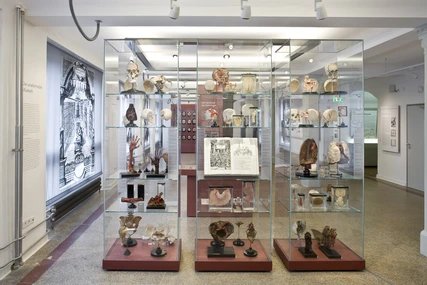
Embark on an exciting journey through 300 years of medical history! At the Charité Medical History Museum in Berlin, you can learn all about the history of medical research, surgical instruments, technical innovations and the transformation of medical practice over the centuries. Particularly impressive: the museum uses examples and objects to illustrate how diagnoses, therapies and surgical possibilities have changed over time. This includes the presentation of specimens and preserved human body parts that were previously kept for teaching and study purposes. They are displayed in a respectful and dignified manner. Nevertheless, these special exhibits can be emotionally challenging. Therefore, the museum is more suitable for older teenagers and adults and, in our opinion, not suitable for children. But anyone who is fascinated by medicine and science, a piece of human history and, ultimately, the big questions surrounding the human body will be deeply impressed.
When: Tue, Thu, Fri, Sun 10 a.m.–5 p.m. / Wed + Sat 10 a.m.–7 p.m.
Where: Charité Medical History Museum, Charitéplatz 1, Mitte
Tip 4: URBAN NATION MUSEUM for Urban Contemporary Art
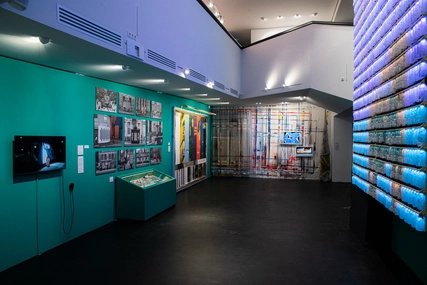
Street art and urban art are an integral part of Berlin's cityscape and have a special characteristic: art on building facades and in open urban spaces is transient, and this ephemeral nature is also part of the concept. In the Urban Nation Museum, you can experience precisely this transience of the artworks, which, incidentally, have not been "taken" from the cityscape, but were largely created for the museum's exhibition project. The works can be viewed particularly well on the high floors connected by bridges – both up close and from a distance . At the same time, the museum is also dedicated to the history and background of the artistic movement. Incidentally, the exterior façade is regularly designed by different artists .
When: Tue + Wed 10 a.m. – 6 p.m., Thu to Sun 12 p.m. – 8 p.m., closed on Mon
Where: Bülowstraße 7, Schöneberg
Tip 5: Samurai Museum Berlin
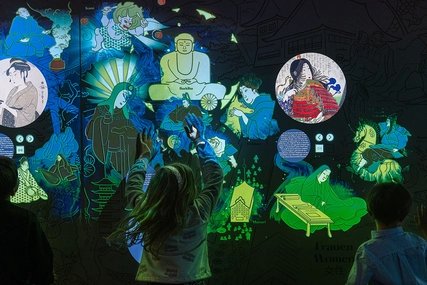
If you are fascinated by the myth of the samurai, then this is the place for you: immerse yourself in the 700-year-old history of the legendary Japanese warrior caste! Not only are there around 1,000 historical exhibits on display, including armour, swords and masks, but every 30 minutes in the Nō Theatre you can experience scenes from various Nō plays or taiko drum performances, and in the tea house you can learn about rituals such as the tea ceremony. The many interactive and multimedia stations will introduce you to many other historical and cultural features and influences of samurai culture on modern Japan – including manga, anime and gaming culture.
When: Daily from 10 a.m. to 7 p.m.
Where: Auguststraße 68, Mitte
Tip 6: Werkbund Archive – Museum of Things

Everyday objects surround us constantly – and can be very exciting! The Museum der Dinge is all about products, shapes, materials and the stories behind seemingly "normal" objects. Gain an insight into design culture and consumer history and learn about both design classics and mass-produced items from the 20th and 21st centuries. Unless you are very young, you will find the familiarity of the items amusing and suddenly realise how strongly product design shapes and influences our lives. See the "Frankfurter Küche" – a milestone in modern living and household design, the white "Michelin Man", a rubber bathing cap from the 1970s or children's trainers with a Barack Obama motif.
When: Thursday to Monday, 12 noon to 7 p.m., closed Tuesday and Wednesday
Where: Leipziger Straße 54, Mitte
Tip 7: Berlin Police History Collection
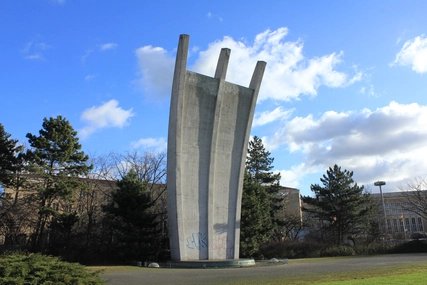
The first Berlin police president was appointed in 1809 – the various uniform mannequins with elaborate pointed hoods look wonderfully comical! The same goes for the police's "means of transport" through the decades. But the Police History Collection offers you much more: installations, films, seized tools of the trade, reports on spectacular criminal cases, as well as films and photos with contemporary witnesses. The history of Berlin's criminal investigation and protective police is exciting and is presented vividly and critically in all its ups and downs . Particularly exciting are the daily reports from all periods. Whether it's about the judicial reappraisal of Nazi justice after the Second World War, the squatter scene or a police operation on the occasion of the Rolling Stones' guest appearance at Berlin's Waldbühne.
When: Mon to Wed, 9 a.m. to 3 p.m.
Where: Berlin Police Headquarters, Platz der Luftbrücke 6, Tempelhof
Tip 8: Museum of Silence

A few large paintings by artist Nikolai Makarov, misty fragments of clouds and landscapes coloured in dim black-brown, and gently lit rooms in deep, earthy red tones – this is the special atmosphere in the Museum of Silence, which you will perceive as meditative, holistic and intimate. Another interesting aspect is the "path architecture" made up of models, including works by Sergei Tchoban, Franco Stella and Max Dudler. If you're out and about in the lively Mitte district at the weekend, take advantage of this oasis of calm and contemplation, where sound-absorbing carpets swallow up even the slightest noise.
When: Saturday–Sunday 2–7 p.m.
Where: Linienstraße 154A, Mitte
Tip 9: Plattenbau Museum Apartment
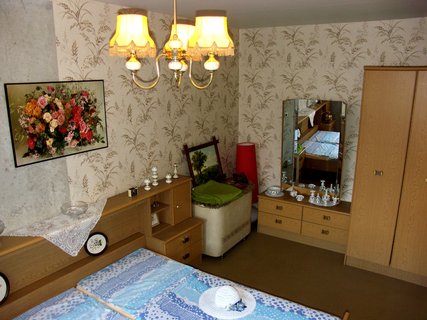
It's not just a trip back in time to the GDR era. When you enter the Plattenbau Museum Apartment in Berlin-Marzahn , you immediately feel like a guest: not only are the upholstered furniture and kitchen fittings still there, but everything from toothbrush holders to salt shakers, wallpaper, flooring and light switches – everything is from GDR production. Let your gaze wander and linger on Walter Womacka's painting "Am Strand" (On the Beach) – perhaps the best-selling work of art in former East Berlin. Anyone who was able to move into one of the ultra-modern prefabricated flats in Marzahn in the 1970s and 1980s was happy, and the WBS-70 models from the VEB Wohnungsbaukombinat Cottbus were a luxury for most people, as they had their own bathroom, hot water and district heating. Take a Sunday trip to the "Platte" and round it off with the popular "Skywalk", 70 metres above the Marzahn Promenade – in good weather, you can see all the way to the city centre and the entire Brandenburg countryside from there!
When: Sun 2–4 p.m.
Where: Hellersdorfer Straße 179, Marzahn
Tip 10: German Film Archive
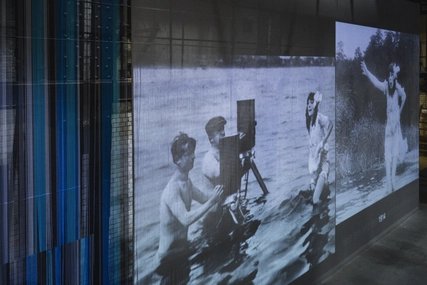
You may be familiar with the Museum of Film and Television on Potsdamer Platz, which had to close. Until a permanent location for its collection has been found, the Deutsche Kinemathek invites you to visit the multimedia installation "Screentime" at E-Werk Berlin. Here, over the next few years, you can once again see highlights from 130 years of German film and television history: unforgettable film scenes, photographs, costume designs for Marlene Dietrich, masks from Fatih Akin's film "Rheingold" and much more. The historic hall of the former substation has been transformed into a high, 600-square-metre exhibition space with floating gauze surfaces and exciting projections. Let yourself be carried away by moving images and discover that their history is an ongoing process: multi-layered, fascinating and full of contradictions.
When: Daily from 10 a.m. to 6 p.m.
Where: Deutsche Kinemathek im E-Werk, Mauerstraße 79, Mitte
Tip 11: The Citadel's Provisions Magazine

The permanent exhibition in this small museum, once the provisions store of the Spandau Citadel, fits in unusually well with its surroundings: in the courtyard of the 16th-century fortress with its thick walls, you can almost hear the neighing of horses and the cries of knights. The converted provisions store also displays original monuments from Berlin that have disappeared from today's cityscape, often "for reasons" of course. The exhibition "Unveiled: Berlin and its Monuments" displays some huge sculptures, including the rulers' sculptures from the former Siegesallee, now Straße des 17. Juni, as well as the famous "Lenin Head" and the "Decathlete"by Arno Breker, Adolf Hitler's favourite artist. As you can see, monument culture is not a simple topic at all! The exhibition shows you how those in power wanted to shape the cityscape – and how quickly monuments can disappear again after upheavals. The trip is well worth it, especially if you also want to see knight's armour, helmets, pewter jewellery and much more from the history of the citadel in the City History Museum afterwards.
When: Fri to Wed 7 p.m. to 5 p.m., Thu 1 p.m. to 8 p.m.
Where: Spandau Citadel/Proviantmagazin, Am Juliusturm 64, Spandau
Unveiled
You can find a complete overview of unusual museums in Berlin at visitBerlin.de:


