
On 18 March, Berlin will celebrate it's first Democracy History Day: a date that commemorates the revolution of 1848 and the first free People's Chamber elections in 1990. To celebrate, the city is hosting a wide range of guided tours, talks and exhibitions dedicated to these pivotal moments.Follow the traces of history through Mitte, explore murals that speak at the East Side Gallery, and join conversations about civic participation at the Humboldt Forum. This is your opportunity to experience democratic history in the very places where it unfolded.
Good to know: Unlike International Democracy Day in September, 18 March is a newly established day of remembrance in Berlin.
Tip 1: Talking pictures at the East Side Gallery

Street art meets contemporary history: at "Sprechende Bilder" (Talking Pictures), you will discover the East Side Gallery not only as an Instagram hotspot, but also as a political monument. The painted remains of the Wall tell of hope, new beginnings and the end of division. Learn about the stories behind motifs such as the Brotherly Kiss and why the painted Wall is now a symbol of freedom and democracy. Be inspired and bring your questions with you.
Tip: In our Berlin Unboxed podcast episode "From the Brotherly Kiss to Belarus", we take you on a walk along the East Side Gallery with Frank Ebert, Berlin's Commissioner for the Reappraisal of the SED Dictatorship, and talk to Anna from Belarus about what freedom really means today.
When: 21 March 2026, 3–5 p.m.
Where: East Side Gallery, visitor information at the gatehouse, Mühlenstraße 74, Friedrichshain
Tip 2: Revolution Makes Democracy – City walk & discussion
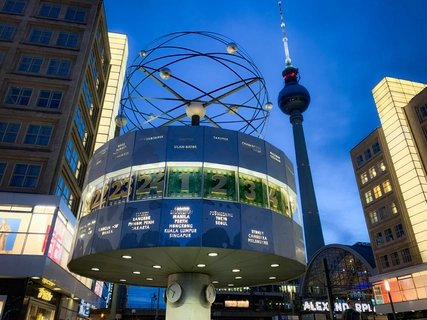
Why is 18 March a key date twice over? On this city walk through Berlin's city centre, you will follow in the footsteps of history from 1848 and 1990. The tour starts at the World Clock on Alexanderplatz. From there, the city walk takes you right into the events of 18 March 1848, the barricade fights, the demands for fundamental rights and the spirit of optimism at the time. Then you jump to 1990 and learn more about the first free People's Chamber election. A powerful double programme for anyone who wants to delve deeper. And best of all, participation is free!
And because democracy thrives on participation, experts will then discuss political participation then and now at the Humboldt Forum. Participation is also free of charge.
When: 18 March 2026, 3:45 p.m. (walk) & 5 p.m. (panel discussion)
Where: Start: Alexanderplatz, World Clock, Mitte · End: Humboldt Forum, Schloßplatz, Mitte
Revolution Makes Democracy
Tip 3: Commemoration ceremony & discussions at the Cemetery of the March Fallen
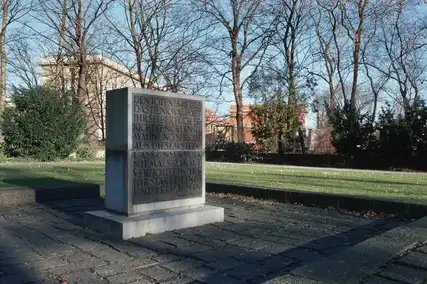
This place is one of the most authentic sites in German democratic history. And at the memorial service marking the 178th anniversary of the 1848 revolution, it becomes clear that democracy cannot be taken for granted, but was hard-won. A special highlight is the reopening of the special exhibition "Forgotten Memories". Take part in one of the curator-led tours and learn how the culture of remembrance has changed over the decades.
When: 18 March 2026, 11 a.m. (commemoration ceremony), 2 p.m. (curator's tour)
Where: Cemetery of the March Fallen, Ernst-Zinna-Weg 1, Friedrichshain
Tip 4: Dare to be more democratic
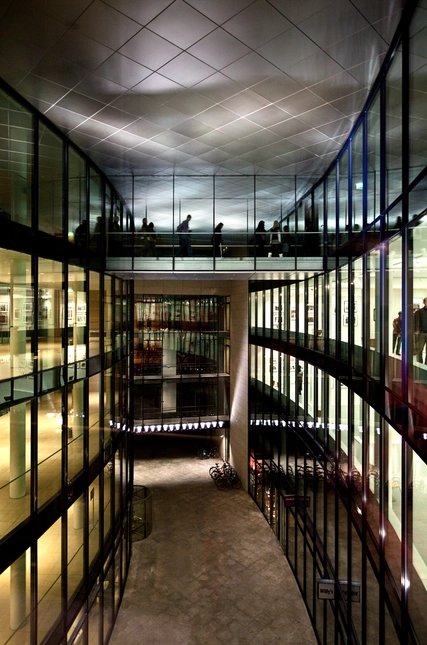
"Dare more democracy" – this famous quote by Willy Brandt is more relevant today than ever. On this themed tour at the Willy Brandt Forum, you will learn all about the background to this famous saying, which continues to shape politics and society to this day. You will gain insights into the era of Ostpolitik and détente at that time and learn more about the courage and willingness to reform of the social-liberal coalition. Immerse yourself in the life of a man who, like no other, stands for democratic Berlin, and let yourself be inspired by his visionary spirit.
When: 18 March (main tour at 3 p.m.), exhibition open on weekends
Where: Forum Willy Brandt Berlin, Behrenstraße 15, Mitte
Tip 5: Understand the "building of democracy" at the Konrad Adenauer Forum

Democracy does not happen overnight. At the Konrad Adenauer Forum, you can learn how the Federal Republic was politically structured after 1945. Take a closer look at the cornerstones of our former Federal Republic and explore the Basic Law. This themed tour focuses on the challenging period after the Second World War and the arduous but successful establishment of democratic structures. You will learn about the visions and strategies of the founding fathers and find out why Berlin has always played a special role in this process.
When: 22 March 2026, 3 p.m.
Where: Konrad Adenauer Forum, Behrenstraße 18, Mitte
Tip 6: Experience the moving story of "Fatma & Fatoş"
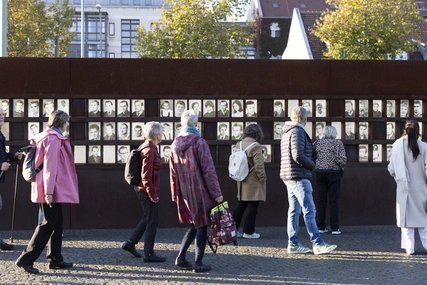
With "Fatma & Fatoş", the Berlin Wall Memorial brings major political events to a very personal level. It is based on reports from Berlin contemporary witnesses, especially women who came to Germany as migrants and had to fight for their place in divided Berlin. How did they perceive the Wall, how did they experience the social and democratic upheavals?
In collaboration with the Komische Oper, themes such as home, identity, prejudice and self-discovery were artistically processed and told with a wink in the stories of a fictional character. The result is a story about identity, longing and everyday life in a politically and socially divided city.
When: 18 March 2026, 6.30 p.m.
Where: Berlin Wall Memorial (Visitor Centre), Bernauer Straße 119, Mitte
Tip 7: Exchange ideas in the neighbourhood storytelling café
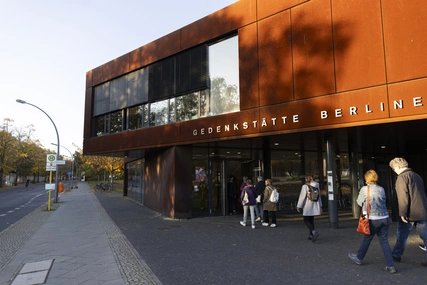
History lives on in memories. At the storytelling café "The Wall, Us and Bernauer Strasse," residents recount their experiences of the Wall era and the subsequent changes. The focus is on personal experiences as well as getting people talking to each other. A photo album of Bernauer Strasse, which on 13 August 1961 went from being a normal residential street to a divided neighbourhood , provides food for thought. In a relaxed atmosphere with coffee and pastries, you can ask questions and learn how neighbours became strangers and eventually friends again.
When: 22 March 2026, 2 p.m.
Where: Berlin Wall Memorial, Bernauer Strasse 119, Mitte
Tip 8: Experience the drama of Bernauer Strasse after the Wall was built
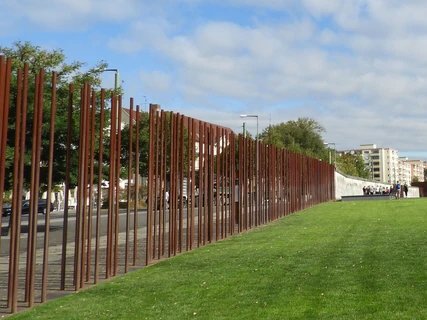
No street in Berlin symbolises the cruelty of division as much as Bernauer Strasse. In this bilingual tour (German and English), you will learn what division actually meant: suddenly, windows were bricked up and you needed a travel permit to visit your neighbours across the street.
Here you can see the last remaining section of the border fortifications with the death strip. An original location that brings Berlin's history to life and clearly shows you how much the lives of the people of Berlin changed on 13 August 1961.
Tip: To mark Democracy Day, the Berlin Wall Memorial is offering guided tours in various languages, including Hebrew on 21 March and Polish and Turkish on 22 March, each at 2 pm.
When: 22 March 2026, 2 p.m.
Where: Berlin Wall Memorial – Visitor Centre, Bernauer Straße 119, Mitte
Tip 8: Design your "visions of the future" for Berlin
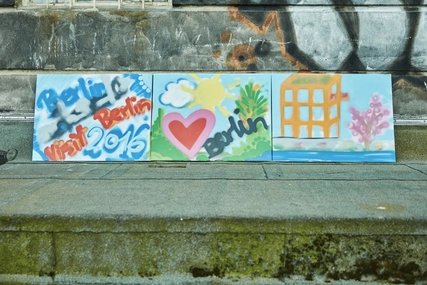
What does a democratic future look like? "Visions of the Future" at the Berlin Wall Memorial is about the questions of tomorrow and what hopes and ideas you have for a shared future. Under artistic and educational guidance, you will create prints and paintings based on your visions of the future. The aim is to start a conversation and develop ideas together. Just come by and join in. Participation is free of charge.
When: 21 March 2026, 2–5 p.m.
Where: Berlin Wall Memorial (Visitor Centre), Bernauer Straße 119, Mitte
Tip 10: Ask yourself during the highlight tour: "Who owns the city?"

Who owns Berlin – and who decides? This highlight tour at the East Side Gallery asks precisely this question and explores urban development and participatory culture. In German, Spanish or English, you will explore street art, urban space and historic sites. How do we deal with this today? And what happens when investor interests clash with art? An inspiring tour about participation in urban space that raises critical questions and lets you explore the city from a new perspective.
When: 22 March 2026, 2 p.m.
Where: East Side Gallery (gatehouse), Mühlenstraße 74, Friedrichshain
Tip 11: Experience democratic history in Berlin
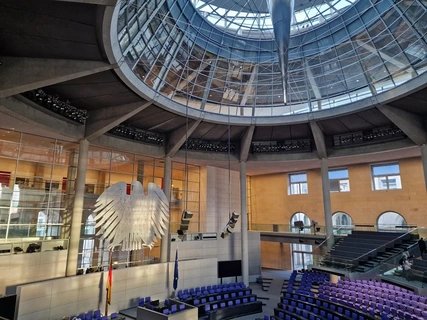
Berlin is not only a political centre, but also an open history book of democracy. From the Reichstag with its glass dome to the Band des Bundes (Band of the Federation) and the German Cathedral on Gendarmenmarkt: in Berlin, you can experience parliamentary processes transparently and follow current debates directly. Places such as the European House, the Futurium and the Campus for Democracy in the former Stasi headquarters also show how democratic ideas have developed in Europe, what ruptures there have been and how co-determination can be shaped today and in the future.
Tip: Use our ABOUT Berlin app to search for clues and discover places throughout the city where freedom, rights and social participation were fought for, defended and further developed.
Download it now for free for your trip to Berlin.


There is much to tell. ABOUT BERLIN.


