
Berlin is wonderful, chaotic and always a little bit crazy. From the idyllic Wannsee to the hustle and bustle of Pankow , 3.6 million people live here, who are just as proud of their world history as they are of their currywurst and the culture of the Spätis. Anyone who visits the capital quickly realises that boredom is unheard of here. To make sure you're well prepared for the Berlin jungle, we've packed the city's unique attitude to life into 26 fun facts.
Curtain up for our Berlin ABC!
A for Ampelmännchen

After reunification, Berlin's beloved Ampelmännchen was to be replaced by its West German counterpart. However, Berliners were anything but happy about this, leading to protests. These protests had an effect: the city included the Ampelmännchen in its guidelines for traffic light systems as an approved symbol, allowing it to continue shining cheerfully on the streets.
B for bridges

It's hard to believe, but Berlin has more water than many people think and boasts around 1,100 bridges. This puts the German capital in the shadow of even Venice, which only has around 400 bridges. Particularly impressive is the Oberbaum Bridge with its striking towers, which connects Friedrichshain and Kreuzberg and was once a border crossing. Whether small footbridges in the Tiergarten or massive railway bridges over the Spree – the cityscape is significantly shaped by these architectural connections, which make Berlin a city of pathways.
C for Currywurst

Currywurst is much more than just a meal in Berlin: it is a culinary institution and a real piece of contemporary history. Herta Heuwer invented the legendary sauce in 1949 in her kiosk on Kantstraße out of sheer necessity and a love of experimenting with ingredients from British soldiers. Today, around 70 million portions are consumed in the capital every year – sometimes with, sometimes without the sausage casing. Whether on the chic Ku'damm or at a rustic snack bar in Wedding, currywurst remains the lowest common denominator of all Berliners.
D for Döner

Berlin is undisputedly considered the birthplace of the modern kebab in flatbread as we know it today. In the early 1970s, Kadir Nurman came up with the ingenious idea of offering meat directly in bread with salad and sauce so that commuters at Zoo Station could have a quick meal on the go. There are now over 1,600 kebab shops in Berlin – far more than in Istanbul. The dish has become an integral part of Berlin's cityscape and has long since evolved from a simple snack to a multicultural symbol of the city.
E for East Side Gallery
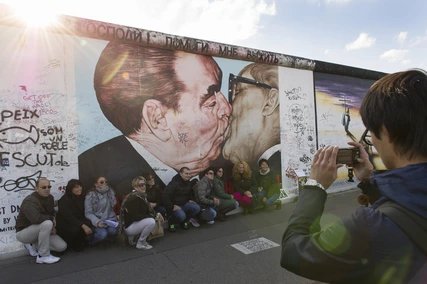
What was once a symbol of oppression is now the longest open-air gallery in the world. In 1990, exactly 118 artists from 21 countries immortalised themselves on a 1.3-kilometre section of the Hinterland Wall in Friedrichshain. Probably the most famous image is the "Brotherly Kiss" between Brezhnev and Honecker, painted by Dmitri Vrubel. The gallery is a listed building and a colourful memorial to the peaceful overcoming of borders. Millions of tourists make the pilgrimage here every year to see the works of art that have been applied directly to the concrete of the former death zone.
F for Fernsehturm (TV Tower)

At an impressive 368 metres, the Berlin TV Tower on Alexanderplatz is the tallest building in Germany and an unmissable landmark. It was opened in 1969 by the GDR leadership as a symbol of modernity and progress and offers a breathtaking 360-degree view of the entire region.
A curious detail is "The Pope's Revenge": when the sun shines, the light reflects on the sphere in such a way that a glowing cross appears. Today, the television tower is a tourist magnet with its rotating restaurant in the dome.
G for Gardens of the World
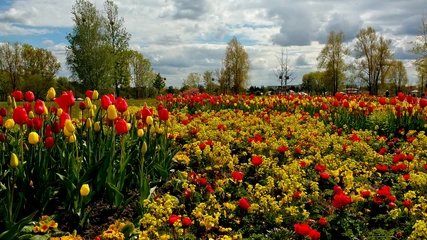
In Berlin-Marzahn, you will find a green oasis that takes visitors on a botanical world tour without having to leave the city limits. The "Gardens of theWorld" showcase masterful garden art from China, Japan, Bali, the Orient and Europe on a huge area. A special highlight is the cable car, which was built for the International Garden Exhibition in 2017 and offers a spectacular view over the park and the surrounding prefabricated buildings. It is a place of tranquillity and aesthetics that contrasts wonderfully with the often hectic bustle of the city.
H for Hertha BSC
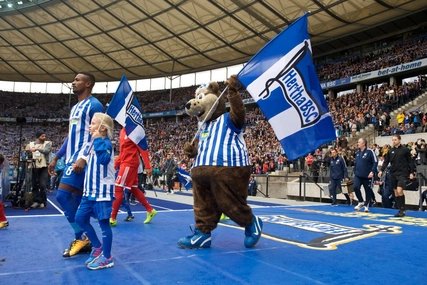
The club, often affectionately referred to as "Die Alte Dame" (The Old Lady ), was founded in 1892 and is Berlin's second largest sports club. Hertha plays its home games in the monumental Olympic Stadium , which can accommodate over 74,000 spectators – a backdrop that is unrivalled in the Bundesliga and 2nd Bundesliga. The club's history is a rollercoaster ride of emotions between championships, scandals and relegations. But the fans remain loyal: the song "Nur nach Hause geh'n wir nicht"(We're not going home), sung by Frank Zander, gives you goosebumps before every kick-off.
I for "Ich bin ein Berliner" (I am a Berliner)

On 26 June 1963, US President John F. Kennedy gave one of the most famous speeches of the Cold War in front of Schöneberg Town Hall. With the legendary phrase "Ich bin ein Berliner" (I am a Berliner), he expressed the unbreakable solidarity of the USA with the city, which was then enclosed by the Wall. There is a persistent rumour that Kennedy embarrassed himself because "Berliner" also refers to a type of pancake . However, this is incorrect: the sentence was grammatically correct and was understood by the cheering crowds exactly as it was meant – as a commitment to freedom.
J for "Juten Tach!"

The Berlin dialect, known as "Berliner Schnauze", is more than just a dialect – it is a way of life. It is direct, often loud and sometimes a little rough for outsiders, but mostly "well-intentioned". Grammatically, the dative is often confused with the accusative ("Ick liebe Dir"), and the "G" almost always becomes a soft "J". Anyone who orders a bread roll in a bakery immediately reveals themselves as a tourist – here it is called a "Schrippe" . And what is known as a "Berliner" (the pastry) in the rest of Germany is simply called a "Pfannkuchen" here.
K for cultures
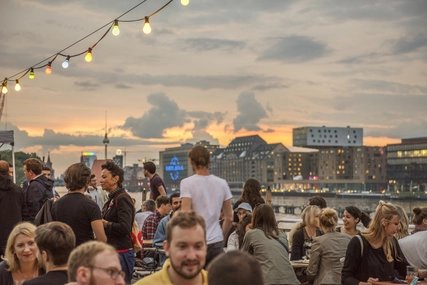
Berlin is a real melting pot: people from around 190 nations live here peacefully together. This diversity culminates every year in the "Carnival of Cultures" in Kreuzberg, a huge street parade where hundreds of thousands celebrate music, dance and costumes from all over the world. Multicultural coexistence is part of everyday life, especially in districts such as Neukölln and Wedding . This shapes not only the street scene, but also the city's culinary landscape – from Vietnamese pho soups to Arabic falafel and Italian pizza, you can find the whole world on your plate here.
L for favourite animal: dog
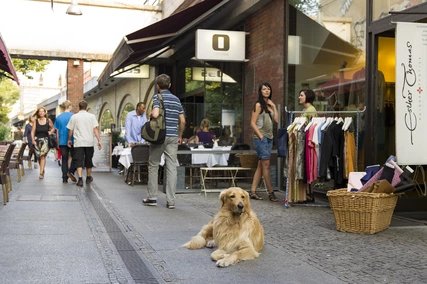
Dogs are omnipresent in Berlin and enjoy a great deal of freedom. It is not uncommon for dogs to be taken to the office ("office dogs") or to restaurants, where a water bowl is often already provided. A particularly curious trend is the extremely high density of French bulldogs in the trendy districts. With well over 120,000 registered dogs, Berlin has a huge lobby for four-legged friends, including its own swimming lakes and strict Berlin dog laws to ensure orderly coexistence.
M for Mauer

For 28 years, the Berlin Wall was the symbol of the division between East and West, enclosing West Berlin over a length of 155 kilometres. After its fall in 1989 , it disappeared almost completely from the cityscape, but it is still present today in places such as the Bernauer Straße Memorial and the East Side Gallery. The latter is the longest preserved section at 1.3 kilometres and was painted by artists from all over the world as a monument to freedom. Today, the former strip of the Wall is a green path for cyclists and pedestrians, healing the wounds of the past.
N for nightlife

Berlin's nightlife enjoys an almost mystical reputation worldwide and is the main reason many people visit the city. Legendary clubs such as Berghain, Tresor and Sisyphos offer excess and freedom on dance floors that often play non-stop from Friday evening to Monday morning. The door policy is notoriously strict, and those who make it inside find themselves in a world where photography is prohibited and social conventions apply. Berlin is the techno capital par excellence, where electronic music is not just a genre, but a deeply rooted attitude to life and an economic factor.
O for opera houses

Berlin is the only city in the world that can afford to run three state opera houses, which underlines its cultural significance. The Staatsoper Unter den Linden captivates with its baroque splendour, while the Deutsche Oper in the west is known for its clear acoustics and modern productions. The Komische Oper (currently located in the Schillertheater), on the other hand, has earned a reputation for innovative musical theatre and humorous productions that appeal to a wide audience.
Together, they offer a repertoire ranging from classical Wagner to contemporary compositions, attracting music lovers from all over the world to the capital.
P for Parks

Berlin is a city of parks, but none are quite like Tempelhofer Feld. Where planes once landed during the Berlin Airlift, there is now one of the largest inner-city open spaces in the world – bigger than Central Park in New York or the Principality of Monaco. Since the airport closed in 2008, the field has belonged to the people of Berlin: here, people skate, cycle, barbecue and even garden on the runways. It is a symbol of Berlin's urban freedom that such a huge, valuable building site in the middle of the city remains completely non-commercial and open to the public.
Q for square kilometre

With an area of around 891 square kilometres, Berlin is huge in terms of size – almost nine times larger than the city of Paris (excluding suburbs). Cities such as Munich, Stuttgart and Frankfurt am Main could all fit into Berlin's area at the same time. This expanse means that Berlin does not have a single centre, but is "polycentric" in structure: each neighbourhood functions like its own small town. This vastness also explains why it can easily take an hour and a half to travel from Spandau to Köpenick by public transport.
R for Rathaus (red town hall)

The Red Town Hall is the official seat of the Governing Mayor and a striking landmark not far from Alexanderplatz. It owes its name not to a political orientation, but to its façade of bright red bricks, which were used in its construction in the 19th century. A special architectural feature is the "Stone Album", a terracotta frieze that tells the history of Berlin from its beginnings to 1871 in 36 reliefs. The representative halls of the building are often used to receive state guests and make important political decisions that have a significant influence on the future of the metropolis.
S for Spree

The Spree is Berlin's lifeline, winding its way through the entire city for 46 kilometres, past government buildings, museums and industrial areas. It used to be an important trade route for barges, but today it is mainly used for tourism by excursion boats , which offer a whole new view of the city.
In the summer months, the banks are transformed into lively areas with beach bars, deckchairs and open-air cinemas, where Berliners and tourists alike can enjoy the water. Although swimming in the Spree is officially prohibited in the city centre, intensive work is underway on a project to make the water clean and accessible to swimmers again.
T for theatre

Berlin is undisputedly Germany's theatre capital . With over 150 venues, including three opera houses and world-famous stages such as the Berliner Ensemble, the Schaubühne and the Deutsches Theater, the choice is enormous. Theatre history was written here, for example by Bertolt Brecht. Every year in May, the "Theatertreffen" takes place, showcasing the most remarkable performances from the German-speaking world. Whether it's classical drama, modern director's theatre or experimental performance in a basement in Neukölln – in Berlin, the curtain rises hundreds of times every evening.
U for U-Bahn

The Berlin underground began operating in 1902 and is now the backbone of urban mobility, transporting over a million passengers every day. The yellow trains are a trademark of the city and run on a network of lines totalling 146 kilometres in length. Many stations are architectural works of art, such as the magnificent Heidelberger Platz or Fehrbelliner Platz, which reflect the era in which they were built. The underground is where you encounter the real Berlin – here, bankers mingle with punks, tourists with commuters, making the trains a social microcosm where it never gets boring.
V for variety
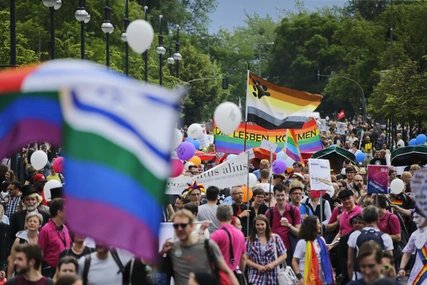
Berlin is one of the most international cities in Europe, where people from over 190 different nations live together and shape the cityscape. This cultural diversity is reflected in an incredible gastronomic scene that offers everything your heart desires, from authentic food stalls to Michelin-starred cuisine . In districts such as Neukölln or Wedding , you often hear more languages than German, making the city a melting pot of cultures and lifestyles. This openness attracts creative people, students and entrepreneurs from all over the world who seek the freedom to live as they see fit in Berlin.
W for reunification

3 October 1990 marks the formal accession of the GDR to the scope of the Basic Law, but for Berlin, reunification began emotionally on 9 November 1989 with the fall of the Wall. The reunification of the divided city was a logistical and social Herculean task: electricity grids, transport systems and administrations had to be merged. Today, the Band des Bundes (Band of the Federation) in the government district is an architectural reminder of this union. Even if the "wall in people's minds" is still mentioned here and there, Berlin is now the physical and political heart of a united Germany.
X for X-Berg
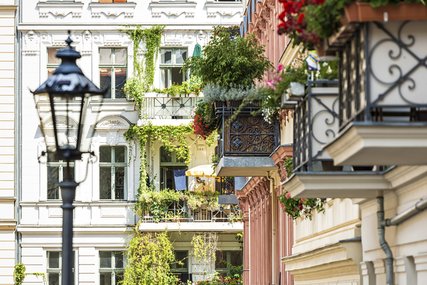
Kreuzberg, often simply called X-Berg, is the epitome of alternative Berlin and known far beyond the city limits for its rebellious history. In the 1980s, the squatter scene met Turkish guest workers here, creating a unique mixture of revolt and multiculturalism. Today, the district is a hub for young creatives, start-ups and a vibrant nightlife scene around Schlesisches Tor and Oranienstraße. Despite ongoing gentrification, Kreuzberg retains its rough charm and remains a place where political statements on the walls are just as much a part of the landscape as the city's best snack bars.
Y for yoga

In recent years, Berlin has developed into a centre for holistic health and yoga , with a studio to be found on almost every street corner. The scene is as diverse as the city itself, offering everything from classic Ashtanga to experimental forms such as laughter yoga or yoga raves in clubs. Especially in the hip neighbourhoods, a yoga mat under your arm is almost part of the daily dress code for many Berliners. It is the perfect counterbalance to stressful everyday life in the big city and shows that, despite their reputation as partygoers, Berliners also attach great importance to mindfulness and physical well-being.
Z for Zoologischer Garten
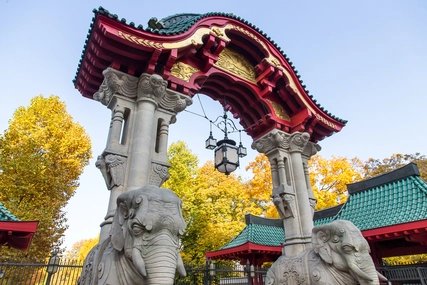
The Berlin Zoological Garden, located directly at Zoo Station, was opened in 1844 , making it the oldest zoo in Germany. It is considered the most species-rich zoo in the world and is home to almost 20,000 animals, including the only giant pandas in Germany, which live in a magnificent enclosure. With its adjacent aquarium , it offers a nature experience in the middle of City West that delights millions of people every year. The historic architecture, such as the Elephant Gate, combines tradition with modern species conservation, making the zoo one of the most popular destinations for families and tourists alike.


