
The selection was not easy for us. Because, of course, there are many other women who have shaped Berlin. Their commitment to equality, their critical perspective, their scientific findings, their literary thought-provoking ideas, their creative work and their lives themselves are still important today and set the course for the future far beyond the city of Berlin.
Whether queen, writer or politician, all the women presented here have helped shape Berlin and life in the city. Here we give you a little insight into their lives, their history in Berlin and where you can find out more about these famous women in Berlin.
Tip 1: Romantic myth: Queen Luise of Prussia
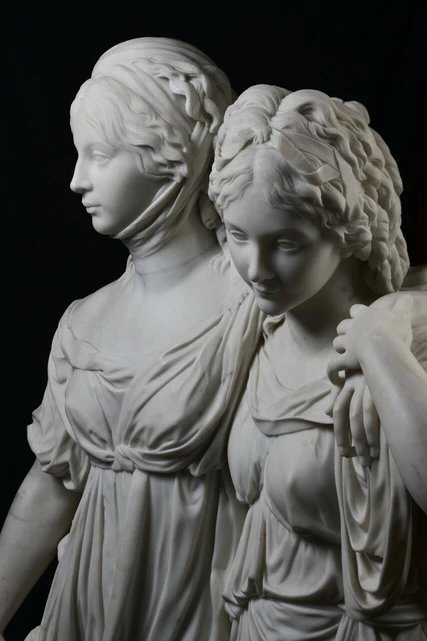
She died young and far surpassed her husband, King Frederick William III, in fame: Queen Luise (1776-1810). Berlin's greatest artists celebrate her: Schadow creates what is probably Berlin's most famous sculpture group, the Princess Group, which depicts Luise with her sister Friederike. Schinkel builds her a mausoleum in Charlottenburg Palace Park, and Rauch designs her tomb sculpture, a delicate sleeping beauty made of marble. Why is Luise already a woman of almost mythical reverence during her lifetime?
It is certainly not only the queen's political and reformist commitment. Even more unusual in Hohenzollern Berlin is the intimate love affair between the queen and the king: they address each other informally in public, joke around, enjoy walks together and even share a marital bedroom. And they are probably the first royal couple to display an intense family life, with their children accompanying them everywhere, to receptions and dinners. Warmth, informality and elegance make up the queen's much-celebrated charm, which lives on today in countless paintings and quotations.
Where: Charlottenburg Palace, Spandauer Damm 10–22, Charlottenburg
Tip 2: Confident and with a sharp pen for women's suffrage: Hedwig Dohm

Women's suffrage and equality are the issues that preoccupied Hedwig Dohm (1831–1919) throughout her life. Even as a young girl, she suffered from not having the same educational opportunities as her brothers. Between 1872 and 1879, she wrote her first volumes of feminist essays.
She went on to write feature articles and novels that took aim at the anti-feminism of bourgeois society in the 19th and early 20th centuries with a sharp pen. She also wrote several comedies that were successfully performed in Berlin. In 1873, she was the first woman in Germany to demand voting rights for women. She advocated for complete equality between men and women. After her husband's death in 1883, she also became actively involved in the organised women's movement. In 1918, she lived to see the introduction of women's suffrage. In 2007, a memorial stone was erected on her grave in the Alter St. Matthäus Kirchhof cemetery.
Where: Old St. Matthew's Churchyard, Schöneberg
Tip 3: A special woman: sculptor, graphic artist and painter Käthe Kollwitz
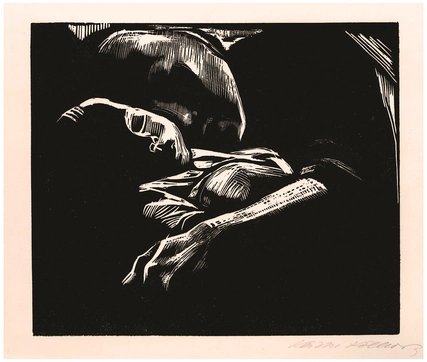
On an October day in 1914, right at the beginning of the First World War, an eighteen-year-old falls on the Belgian front. It is Peter, the youngest son of Käthe Kollwitz (1867–1945). His mother is a well-known, multi-award-winning Berlin artist who sets the tone in the leading German artists' group Berliner Secession. Her prints and posters are bold, political and socially engaged. She has just founded the "Frauenkunstverein" (Women's Art Association) and is fighting for the recognition and appreciation of female artists .
The news of her son's death strikes Käthe to the core. Her infinite grief finds expression in her art and shines through in her artistic commitment as a pacifist and later opponent of National Socialism. Her expressive sculptures and reliefs, including the famous bronze Pietà. Mother with Dead Son ( 1937/39), an enlarged cast of which can be seen in the Neue Wache Unter den Linden, are filled with heartfelt pain over loss, the suffering of war and grief. The bustling Käthe-Kollwitz-Platz in Berlin is named after her. You can learn more about this remarkable Berliner at the Käthe Kollwitz Museum Berlin and the Kupferstichkabinett.
Tip: When visiting the Talking Statue at Kollwitzstraße 1, Prenzlauer Berg, you can download an audiobook about Käthe Kollwitz via QR code and learn more about the famous artist.
Where: Käthe Kollwitz Museum, Spandauer Damm 10, Charlottenburg
Käthe Kollwitz Museum
Tip 4: For freedom and justice: the revolutionary democrat Rosa Luxemburg

Freedom is always the freedom of those who think differently. One of many wise quotes from Rosa von Luxemburg (1871–1919). Born Jewish, she experienced the discrimination faced by minorities first-hand from an early age. Nevertheless, or perhaps precisely because of this, she was committed to fighting for greater justice and democratic socialist action. And she did so at a time when very few women played any role in politics at all.
Rosa Luxemburg is considered a pioneer of the labour movement, an opponent of war and a critic of capitalism. In the wake of the November Revolution, she was arrested by a vigilante group on 15 January 1919 and interrogated, beaten and shot by right-wing military forces. She is buried in the Friedrichsfelde Central Cemetery next to Karl Liebknecht. Here you can also see the Revolution Monument, a memorial to the dead of the labour movement buried in the cemetery. In front of the Volksbühne theatre on Rosa-Luxemburg-Platz, you will find more of her quotes on commemorative plaques embedded in the ground.
Where: Rosa-Luxemburg-Platz Berlin, Mitte | Friedrichsfelde Central Cemetery, Gudrunstraße 20, Lichterfelde
Volksbühne theatre on Rosa-Luxemburg-Platz
Tip 5: The physicist: Lise Meitner

Several schools in Berlin are named after her, as is the Lise Meitner House at the Humboldt University's House of Physics. Here you will also find a talking statue of Meitner (1878–1968). You can learn more about the scientist by scanning a QR code.
Born in Vienna, Lise Meitner was one of the first women to earn a doctorate in physics. In 1926, she became the first female professor of physics in Germany. This was a real breakthrough, especially considering that for many years of her professional career, Meitner had to enter the research and work rooms through the back entrance, as women were not allowed to study in Prussia at that time. Together with chemist Otto Hahn, Meitner researched radioactivity and discovered nuclear fission.
Where: Lise Meitner Memorial in the courtyard of Humboldt University in Berlin, Unter den Linden 6, Mitte
More about sculptures and monuments in Berlin
Tip 6: Botanist and opponent of National Socialism: Elisabeth Schiemann

Elisabeth Schiemann (1881–1972) was one of the first women to be admitted to study natural sciences and subsequently became one of the first female scientists to work at the Botanical Garden. As she was not paid for her research work at the Botanical Museum, she kept her head above water by teaching at Berlin University. Her book Die Entstehung der Kulturpflanzen (The Origin of Cultivated Plants), published in 1932, became a standard work and Elisabeth Schiemann made a name for herself as a recognised botanist. The results of her work are still of great importance today.
She vehemently rejected National Socialism and always liked to include quotations from Jewish and Russian authors in her lectures at the university. She also spoke out publicly against the National Socialist regime of injustice. Together with her sister, she hid two Jewish sisters and was honoured for this in 2014 by the Yad Vashem Holocaust Memorial in Jerusalem with the title "Righteous Among the Nations".
Where: Botanical Garden, Königin-Luise-Straße 6-8, Steglitz
Tip 7: Mother Courage: The life and career of actress and theatre director Helene Weigel
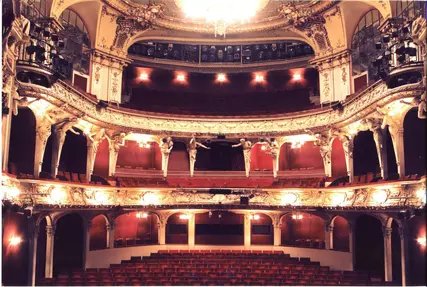
At the age of 19, the young actress attracted attention in her debut role as Marie in Büchner's Woyzeck. From the Neues Theater in Frankfurt am Main, she moved on to the big stages in Berlin in 1922. Here, Helene Weigel (1900–1971) also met Bertolt Brecht, with whom she, in her own words, "got together". However, Helene Weigel took care of their first child on her own so that he could work undisturbed.
Nevertheless, she made her big breakthrough in 1932 in the lead role of Brecht's Die Mutter (The Mother). Two years earlier, her second child, Barbara Kind, was born. Their third "child" was the Berliner Ensemble, where Brecht became artistic director and she became managing director. After Brecht's death, she continued to run the theatre until the end of her life, receiving numerous orders and awards, including the title of professor in 1960, and continuing to perform as "Mother Courage" on stage until the very end.
Where: Berliner Ensemble, Bertolt-Brecht-Platz 1, Mitte
Berliner Ensemble
Tip 8: A realistic interpreter of injustice in this world – Anna Seghers
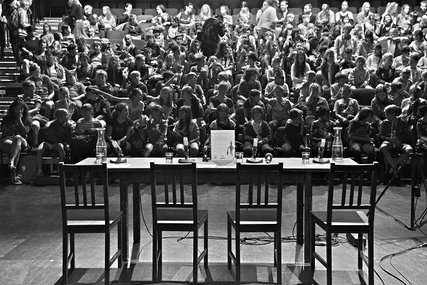
Socially critical publications, for which she received awards, made Anna Seghers (1900 to 1983) a serious literary figure even before 1933. When the Nazis came to power, she was forced to flee. She lived with her family in Mexico until the end of the Nazi era, where she wrote her most successful novel, "The Seventh Cross," about humanity and solidarity as hope in cruel times. Other impressive works – often with female characters as the main protagonists – tell stories of a hunger for life and a longing for happiness, of the courage to be human and to remain true to oneself. Anna Seghers depicts women in their everyday lives; she does not create heroines, but her characters retain their dignity despite all political and social adversities.
Anna Seghers herself held numerous important offices, such as president of the Writers' Association. She also co-founded the Academy of Arts.
If you would like to delve deeper into the life of Anna Seghers, visit the Anna Seghers Museum in Köpenick. You can discover several thousand books and the writer's estate library in the original preserved interior.
Where: Anna Seghers Museum, Anna-Seghers-Straße 81, Köpenick
Anna Seghers Museum
Tip 9: Strong, magnificent, moving: Marlene Dietrich and her life

Marlene Dietrich's (1901-1992) unprecedented career began in the late 1920s as Lola in the world-famous film "The Blue Angel"and continued unabated into her old age: for a while she was decried as "box office poison" until she made a successful comeback with "Destry Rides Again". In Hollywood, she starred in films directed by Billy Wilder and alongside Spencer Tracy, became a global style and fashion icon, and sang chansons. But she had other strengths too: in the 1930s, Marlene Dietrich thoroughly rejected the Nazi regime. From 1939 onwards, she supported refugees in Paris, became a US citizen and accompanied the US Army to the front as a troop supporter during the Second World War. For her commitment against the Nazi regime, she was awarded the US Medal of Freedom in 1947 and the French Knight of the Legion of Honour in 1950. It was only in her old age that she retired and no longer left her Paris apartment.
After her death, Marlene Dietrich returned to Berlin: at first she was considered a traitor to her country, and it was not until 1992 that a simple grave of honour was erected for her at the Stubenrauch Cemetery in Schöneberg. On 16 May 2002, Marlene Dietrich was posthumously named an honorary citizen of Berlin.
Tip 10: Women's clothing and treasures from the Wilhelminian era: the collector and trans woman Charlotte von Mahlsdorf
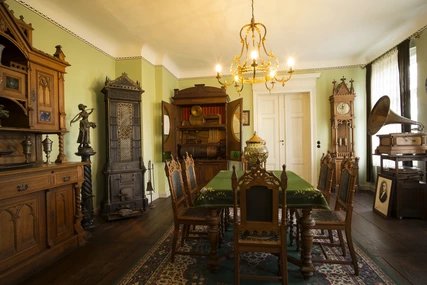
The founder and long-time director of the Gründerzeit Museum in Berlin-Mahlsdorf was born Lothar Berfelde on 18 March 1928 (1928–2002). She is considered one of the most famous trans women in Germany. Rosa von Praunheim even made a film about her dramatic biography, entitled Ich bin meine eigene Frau (I Am My Own Woman). Her father pressured the child, who felt like a girl, to join the Hitler Youth. The two argued a lot, and one night Charlotte killed her father in his sleep.
After four years in a psychiatric ward and in prison, Charlotte von Mahlsdorf worked as a junk dealer after the end of the Nazi regime and moved with her collection first to the abandoned Friedrichsfelde Castle, then to the manor house in Mahlsdorf. Everything you can see there today, Berlin owes to the trans woman who was already interested in old junk and girls' dresses as a child.
Where: Gründerzeit Museum in the Mahlsdorf manor house, Hultschiner Damm 333, Mahlsdorf
Mahlsdorf Manor House
Tip 11: Revered and despised: the writer Christa Wolf

Christa Wolf ( 1929 – 2011) is one of the most important voices in contemporary German literature. Her critical view of the world and existing power structures has earned her many awards, but also repeatedly made her books a political issue – in both the West and the East. As co-author of the appeal "Für unser Land" (For our country), she opposed the general jubilation surrounding German reunification and warned against the appropriation of the GDR by the Federal Republic. Her non-conformity polarised opinion and earned her much criticism. The same was true of her time as an informant for the Stasi under the code name "Margarethe", even though her few reports only contained positive comments about her fellow writers. Later, she herself published her own Stasi file.
Christa Wolf received numerous awards for her work, including "Kassandra" and "Der geteilte Himmel" (The Divided Sky), among others, including the prestigious Georg Büchner Prize. Christa Wolf is buried in the Dorotheenstädtischer Friedhof cemetery in Berlin. Her work, as well as 175,000 manuscripts, diaries, correspondence and around 10,000 letters from readers, can be viewed in the Literature Archive of the Academy of Arts in Berlin, including her correspondence with Anna Seghers.
Where: Dorotheenstädtischer Friedhof, Chausseestraße 126, Mitte | Literary Archive of the Academy of Arts, Robert-Koch-Platz 10, Mitte


